Watch This Space
Startopia is a 2001 strategy game in which you take on the role of a company operative tasked with bringing light and life back to some small corner of the universe. A catastrophic, intergalactic war has left the starry void dotted with derelict space stations, and it's your job to turn these deserted toroid structures into hives of activity for passing aliens. When starting up a game in sandbox mode, you'll be dumped into the lowest floor of your space station with no lights, no music, and just a sarcastic AI and a couple of crates for company, and a giant, metal doughnut full of possibilities awaits.
There's something to be said for these opening moments of atmospheric silence, darkness, and potential, it's weird and eerie and strangely peaceful. Don't hang around too long, though, as the crates contain the blueprints for your first few rooms and a few “scuzzer” droids, who are responsible for building and maintenance. Once these first rooms are assembled and the lights turn on and the music kicks in, the game's personality really starts to shine.
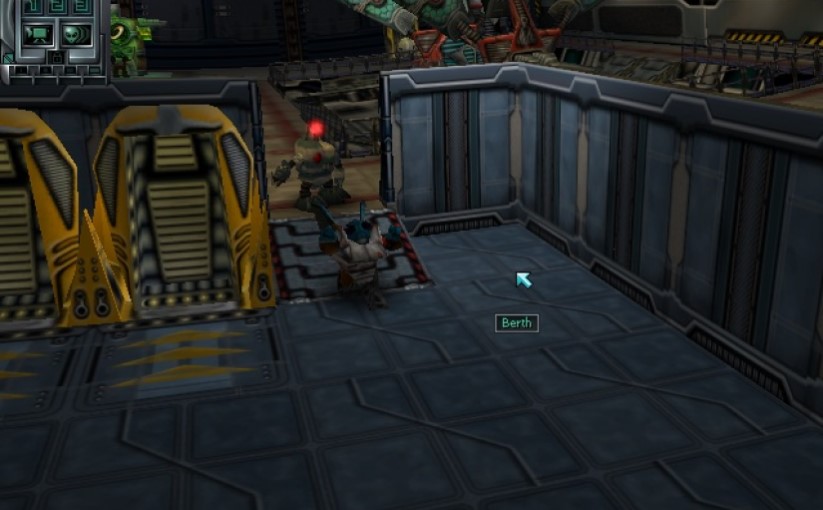
The currency in Startopia is energy, which is stored in a building known as an Energy Collector and is used to pay for staff, charge scuzzers, and purchase goods from various suppliers. You can gain energy by selling produced goods and from aliens paying for services aboard your space station. Certain buildings will require alien employees to work them, and not only do these freeloaders receive an upfront hiring fee, but they then get to waltz around and take advantage of all your services and entertainment for free, so make sure you're getting the most out of them.
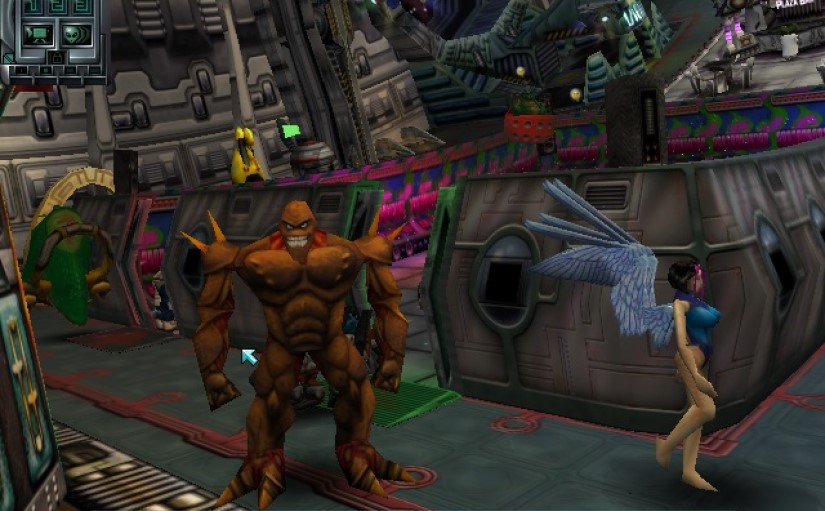
There are numerous alien species that are likely to show up on your space station, ranging from the insectoid Targ, who can be hired to operate your communications arrays, to the sensual Sirens, who can be hired to provide a more personal service (although not in the way you're thinking), and these visitors arrive through your space port, each bringing with them their own skills and needs.
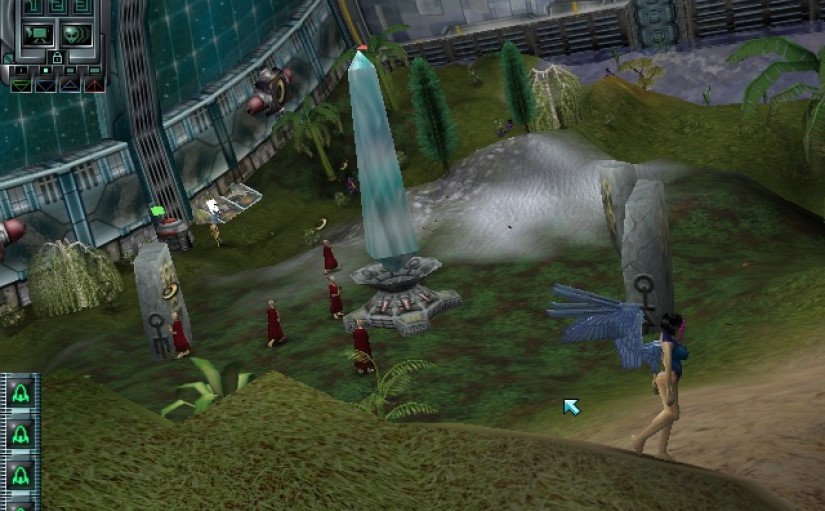
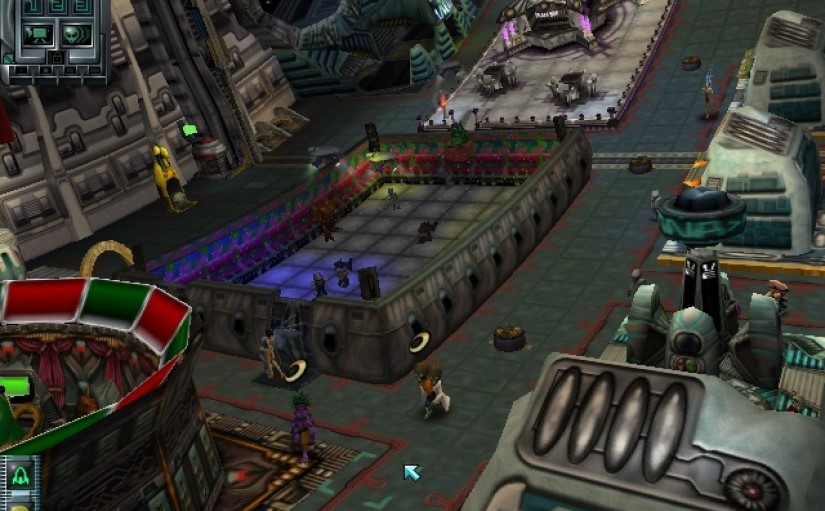
The space station has three vertical levels, and can be expanded horizontally to the point that it meets itself again (although you're likely to be done with a station before you get anywhere near this point). The three levels are the Technical Deck, the Pleasure Deck, and the Bio-Deck. The Technical Deck provides basic services and houses industrial buildings like the Recycler and the Factory, the Pleasure Deck houses all your commercial interests, from hotels, shops, and bars to bizarre, alien fairground rides and the mysterious Love Nests, and the Bio-Deck provides organic “nanosoil” that you can terraform and plant various harvestable flora. This latter deck features a glass roof as well, providing some peaceful, starry views while you rest under giant, alien palm trees and cactuses.
The campaign in Startopia comprises of ten missions and mostly acts as a tutorial for the various mechanics, and if you're anything like me you'll get to the later combat-oriented missions and start to lose interest. The combat and competitive elements of Startopia feel underwhelming and tacked on, and take a distant second to the general station management. The laser battles are barely interactive, and while this is fine for when your security staff need to deal with a saboteur or an agent (or an outbreak of xenomorph-like Skrashers), when it comes to full on faction-on-faction war it's a bit of a clusterflip and victory depends entirely on numbers and preparation rather than any tactical interaction during firefights.
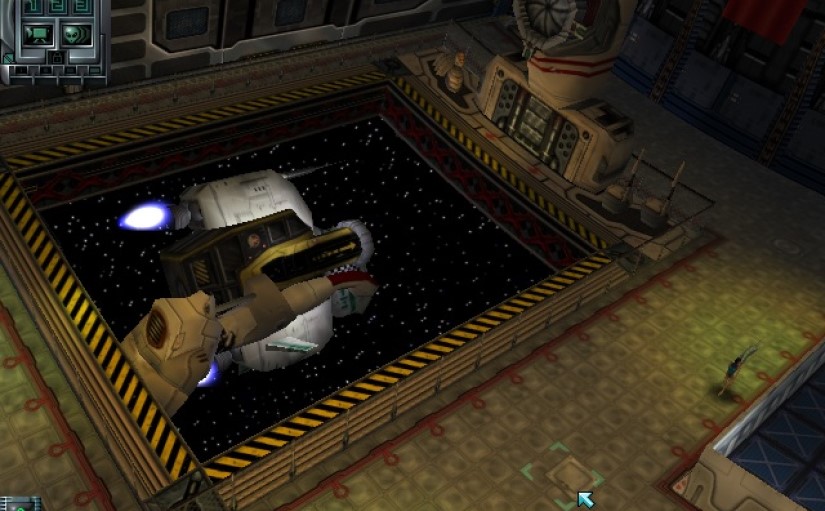
My go-to for Startopia is setting up a peaceful sandbox (with the possibility of enemy agents and Skrashers for spice) and sinking into the simulation aspects. Startopia really excels here, and there's a great deal of fascination to be found in laying out your rooms and buildings, selecting the best alien candidates to run your various facilities, and just expanding as you see fit. The controls work perfectly on the PC, and the graphics, though certainly of their era, are colourful and clear and filled with personality. The game has buckets of charm. The dry, British humour shines through (especially with VAL) and there are lots of nerdy sci-fi references in the dialogue and in the visitor profiles for those who like to understand references.
But for me, it's the atmosphere that sets Startopia apart, and truly cements it as one of my favourite sim games of all time. The electronic music coming from the floating DJ booth on the Pleasure Deck, the exotic bird calls on the Bio-Deck, the dark, quiet corner next to the Cargo Hold on the Technical Deck with a space-rat skittering around, the low-poly galactic vistas spied through the window of the Viewing Gallery, the noise of a merchant ship entering and exiting the Star Dock, it all comes together to provide a thoroughly charming and riveting experience.
It's this sense of personality that's mainly missing from the 2021 reboot, Spacebase Startopia, that has very similar gameplay but loses a lot of the x-factor that makes Startopia so enjoyable. It's not a bad game by any means, and I did get addicted for a while when I picked up the physical Switch version, but the humour mostly misses and the effortless charm just isn't there.
Startopia was developed by Mucky Foot, which apparently consisted of many former Bullfrog devs, and this pedigree is evident throughout the game. I won't tell you it's perfect, mainly due to the lacklustre combat and late-game plateau syndrome that'll leave you running out of things to do, but I will tell you it's special, and that there's a reason why it's a game I can come back to year on year. Pick it up on Steam, do a few levels of the campaign to get your head around the basics, and then open up sandbox mode and build the space station of your dreams, and when you hit that late game plateau where you've built everything you want to, start the whole thing all over again. The draw of those opening moments – the silence, the atmosphere, the potential – is strong, and if you're anything like me it should have you coming back again and again.