The Ascent

A Long, Long Way to the Top

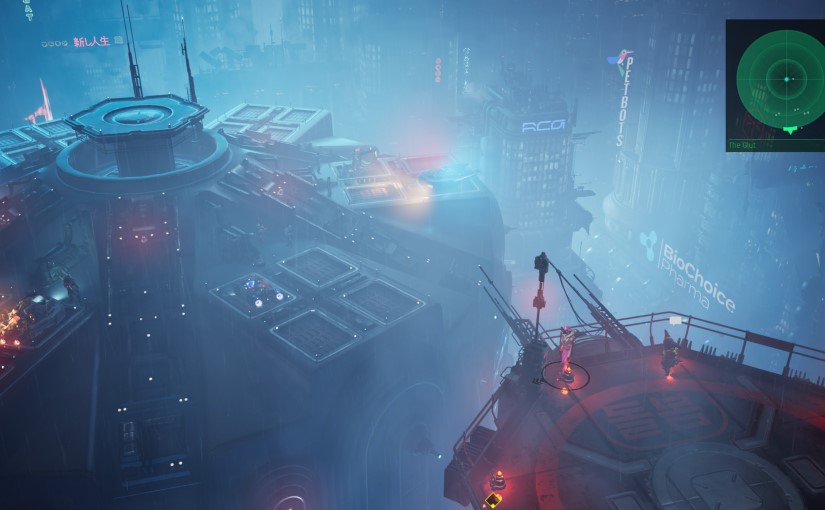
The Ascent is a twin-stick shooter RPG set in an almost painfully detailed cyberpunk world, and the most striking thing about it is that world. The game takes place in one of those arcology things that I first heard about in SimCity 2000, on a distant, dystopian planet called Veles, and once you’ve fought your way out of the first location (a deep, industrial area teeming with mutated “ferals”), this arcology is artistically and impressively realised.

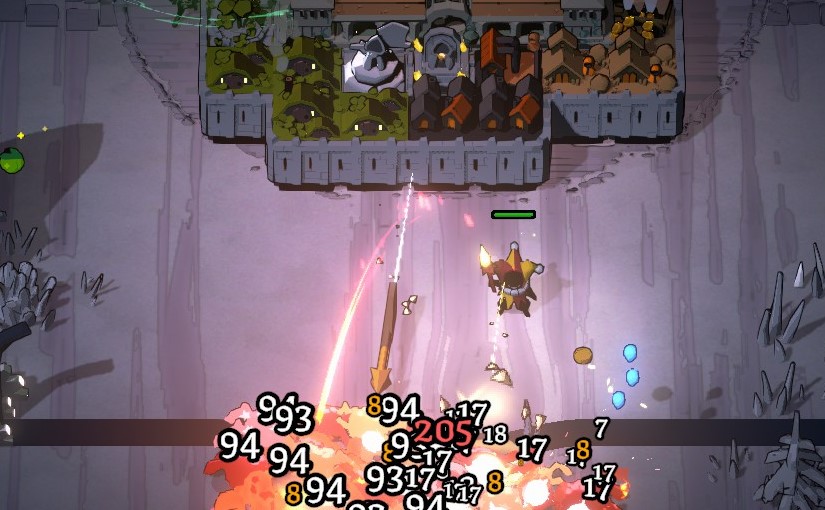
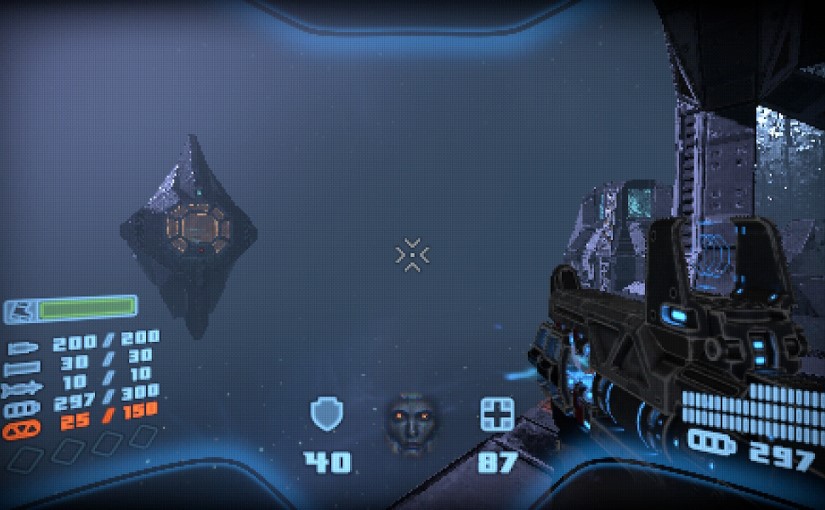
Different ammo types are effective against different bad guys. Against robot baddies like this guy you’ll need energy weapons to take them down effectively.

A city built on multiple layers, metal walkways, piled rubbish, alleyways with bars and shops with detailed interiors, hordes of NPCs hanging around or walking here and there, dancing holograms, passing hover-cars, shining neon lights, and crazy-looking alien races, there’s something to look at everywhere you go in this game. You’re very much encouraged to explore every corner, too, with side-quests and hunts for upgrade parts taking you behind every dumpster and inside every high-tech, equipment-strewn laboratory. The Ascent’s world and ambience is an amazing achievement, but I never felt fully compelled to uncover every area and interact with every NPC, and found myself glazing over when any of those odd-looking alien fellows tried to lay any kind of lore on me.

It might be because of the pacing. The world is large and sprawling, and while there are fast-travel options, they are limited and come with some hefty load-times. Also, whenever you try to walk anywhere you’ll find yourself constantly attacked by veritable hordes of tooled-up cyber-assholes to an immersion-breaking extent. It does get annoying, and it gets you to wondering where the heck The Ascent’s equivalent of MAX-TAC are. These streets are absurdly lawless, and wandering NPCs are constantly strolling into the line of fire and getting themselves spectacularly dismembered. It’s too much and it’s all the time, and it took me out of the world.

There is a story with loads of lore to back it up, but I couldn’t drum up much interest and found myself checking my phone, sipping my root beer, or staring into my lime and coconut-scented candle during cutscenes.

As for the gameplay, it’s pretty good. The violence unfolds in satisfying fashion when you’re not overloaded by the non-stop backtracking encounters, and there are loads of weapon-types and techy skills and upgrades to fiddle about with until you find a character build you like. It does feel clunky sometimes, though, and there are some frustrating difficulty spikes to the point that on one or two occasions I felt that I had to cheese my way through. It was that, or grind a few levels, and I wasn’t enjoying the combat enough (and nor was it mindless enough) for me to go grinding.

It was the atmosphere that kept me coming back until I beat the campaign.

The Ascent is undoubtedly a good game, and the environments are nothing short of stunning, but some frustrating battles, user-unfriendly fast-travel and world design, long load-times and occasional slowdown all hold it back from being as great as its visual design deserves. I found myself wishing it was a little bit more linear and a little bit more action-coded. A bit more of a quickie, if you will.

I bet it’s a lot of fun to play cooperatively, though! If your pals can put up with the load-times and constant wandering around, that is.

Played on PS4

Skitchin’ – Retro Review

Fixin’ for Some Skitchin’

I put on roller skates once in my life. It was at my friend David White’s house when I was a little kid. We were in a narrow outside space between the main building of his house and an outbuilding and for whatever reason we decided that I should try a spot of skating. I put them on and carefully pulled myself up with my back to the wall, and then immediately fell painfully onto my arse. I quickly removed the danger-wheels and probably went back inside to fire up David’s ZX Spectrum and play Gauntlet or How to be a Complete Bastard or something (yes that is a real game that he had).

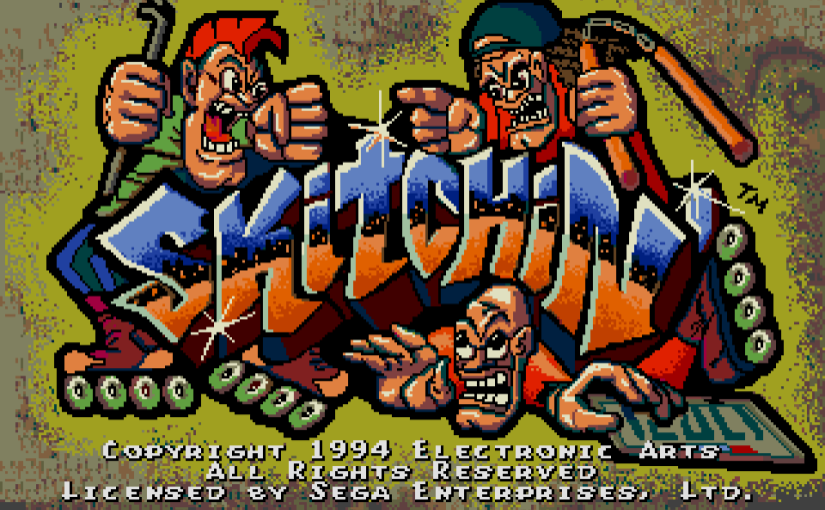
Luckily, Electronic Arts provided me with the opportunity to skate around in an irresponsible and dangerous manner without the risk of breaking my coccyx with their 1994 Mega Drive exclusive title, Skitchin‘. Also, if you’ve been paying attention, you’ll have noticed that I mentioned that I might write about this game in my Bomb Rush Cyberfunk article. Consider this retro review an example of my ass cashing a cheque that my mouth wrote, or whatever that weird saying is.

Have you ever skitched in real life? Go on, you can tell me. I ain’t no skitchin’ snitch.

In Skitchin‘ the player takes on the role of a particularly fearless inline skater and attempts to dominate in a skating tournament spanning Canada and the USA. The races take place on the streets of such locations as New York and Vancouver, and players are able to accelerate, crouch and jump, and attack other skaters. The main hook, though, and the thing that differentiates Skitchin‘ the most from its most obvious inspiration (I’ll go into that more in a bit) is the ability to engage in the noble and titular art of “skitching”, in which one grabs on to a passing vehicle to increase one’s speed. So-called because it’s a portmanteau of “skating” and “hitching”, skitching is very illegal and very dangerous, so do not engage in such activities in real life. Although I’m sure that anyone who remembers the video game Skitchin‘ would be too old now to be physically capable of doing it anyway.

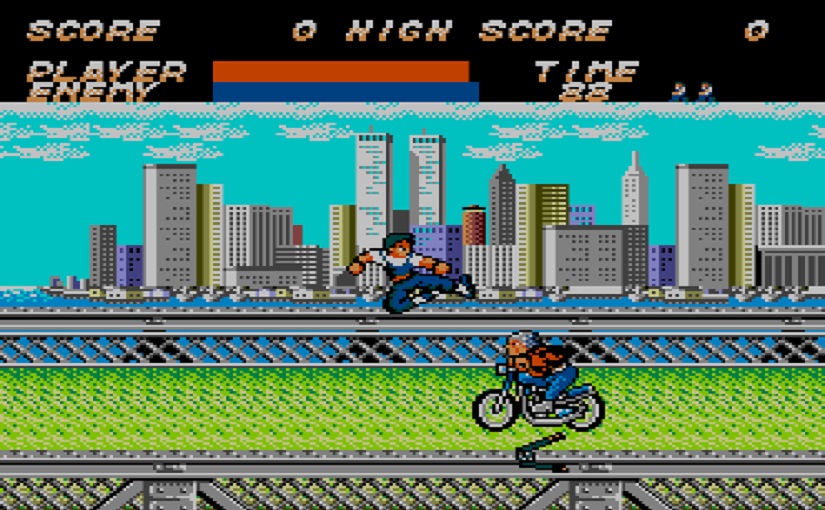
If you haven’t played Skitchin‘ but you have played Road Rash you’ve probably already noticed that those screenshots look mighty familiar. Electronic Arts repurposed the Road Rash engine for this game, and despite the differences in the nuances of the gameplay, Road Rash veterans picking this one up will be having a severe case of deja-vu. The graphics are almost identical, the music has a similar feel, and the competitors are represented by digitised sprites in the vein of Road Rash 3.

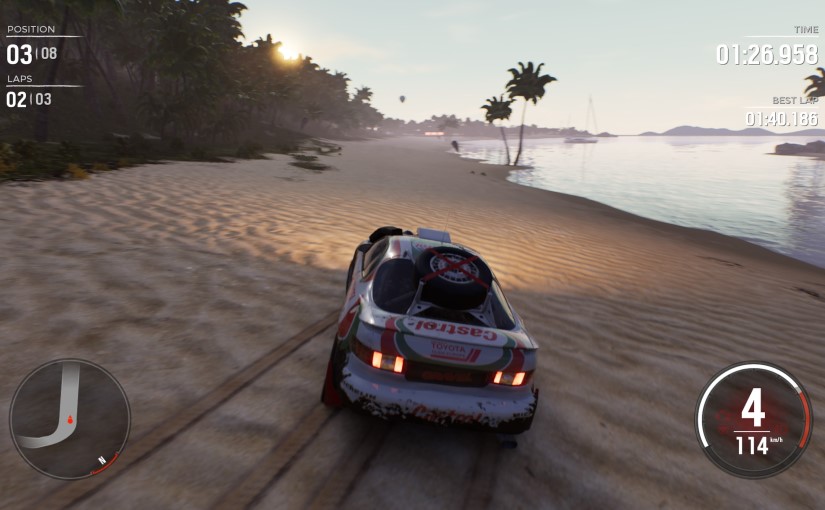
There’s nothing like skitchin’ on Miami beach. Do roads cut through the beach like this in Miami?

The gameplay does have its differences, though. While you can still claim weapons and attack your fellow skitchers, in order to have any chance of catching up to them to do so you’ll have to engage with the skitching mechanic, using the right timing to grab onto passing cars and then choosing an opportunity to let go, catapulting forward with a bit of momentum before hanging onto the next unassuming mini-van. Each race has an entry fee, and players can gain money by finishing in a decent position, and lose it by having to pay for bail if the cops catch you, medical fees if you break something vital, or new gear because your old stuff wears out over time. If you can’t make the entry fee for the next race, it’s game over – no more skitchin’ for you, bucko.

As the tournament advances the tracks get trickier and the cars upon which the art of skitching is to be performed move faster, making the timing a lot more precise. It’s still doable once you get into a flow, but by the time the difficulty ramps up you’ll probably be realising there’s not much in the way of variety. Skitchin‘ goes through the motions again and again, and while the same can be said for Road Rash, the gameplay loop of Road Rash is just that bit purer and more entertaining. Skitchin‘ complicates matters with its skitching mechanic, and arguably makes things more strategic than Road Rash, but the racing feels slower and the violence less impactful. Skitchin‘ is a fun distraction, but it doesn’t have the character or staying power of its older and more successful sibling.

Besides, motorbikes are way cooler than inline skates, right? If I tried to ride a motorbike in real life, though, I’d definitely break more than my coccyx.

Played via emulator (but I did play it on my Mega Drive back in the day).

Bomb Rush Cyberfunk

Back to the Grind

I haven’t posted anything in a while. I don’t really know if there’s anyone out there who looks at this site regularly, but I have been getting a few comments lately so I feel like I should at least put something up before the month is over. I’ve been going through some stuff in my personal life, and when I have had the time and/or mental capacity to write I’ve been prioritising my reviews for Sega Mania Issue 10. However, I’ve still been finishing games, with Sonic Rush, Dragon Quest III: HD-2D Remake, and Transformers: Devastation among the handful of games I’ve knocked on the head this year, all while being in the wrong state of mind to write about the experience. Most recently, though, I finished the indie love letter to Jet Set Radio that is Bomb Rush Cyberfunk, so lets see if I can think of some things to write about that.

Despite being an ardent and loyal Sega soldier right up until the original blue brand bowed out of the console market I’d never actually played Jet Set Radio. At the time I was vehemently anti-skater culture and was more interested in RPGs. Bomb Rush Cyberfunk was released in 2023 and dropped to a budget price pretty quickly, and by this time I was more interested in gaming history and checking out classics that I’d missed. I didn’t want to spend the money on the Xbox or Dreamcast Jet Set Radio games (not yet, anyway), so Bomb Rush Cyberfunk seemed like a cheap and cheerful alternative. It was developed by Team Reptile and wears its inspiration clearly and proudly. Too proudly, some have said, because this game apes Jet Set Radio to the point of obsession right down to the verbal rhythm when you say the name. Still, it was completely original to me.

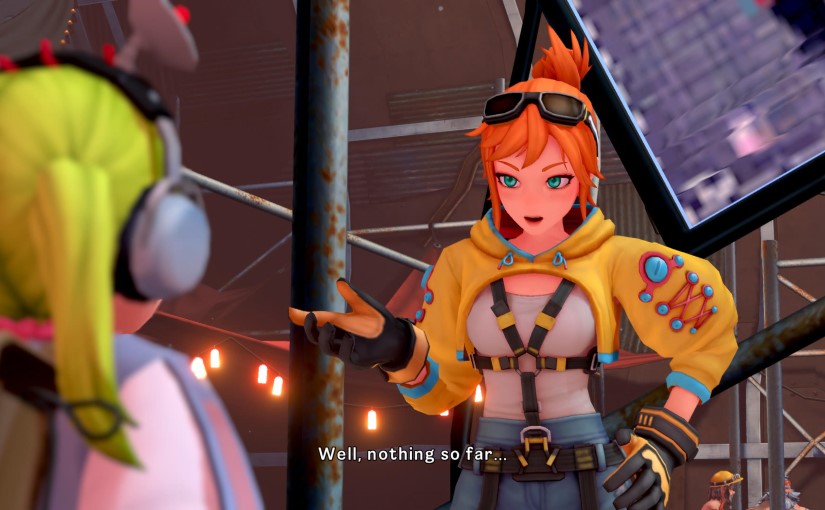
This is Bel, she’s the Gum of Bomb Rush Cyberfunk. That’s a sentence that would sound really strange to the average person.

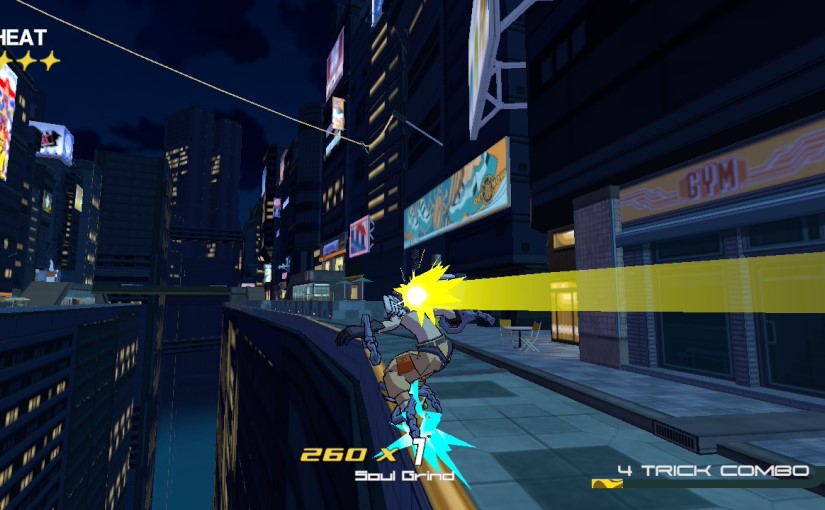
For those of you who aren’t familiar with Bomb Rush Cyberfunk or its inspiration, the aim of the game is to skate your way around a colourful, futuristic city that basically acts as a giant skaters’ playground, taking on the authorities and rival crews, and tagging specific areas with your gang’s graffiti tag. There’s a mad story in which you play as a character who’s head has been cut off and replaced with a robot head and no one seems even remotely fazed by this, up to and including the decapitated character himself. Thanks to the fact that I started this game in 2024, played it a bit more in the summer of 2025, and finally finished it this year, though, I couldn’t really follow the story that well, and when the big reveal of the protagonist’s identity happened I didn’t really understand what was going on, but that was on me.

While free roaming, you’ll be exploring, rail-riding and tricking with impunity and it feels pretty good just to skate, slide, or bike around without the pressure of finding out what happened to your head weighing you down. You’ll also be seeking out and collecting outfits, graffiti designs, and music tracks, and tagging specific spots throughout the neighbourhoods to increase Bomb Rush Crew’s rep. Partaking in this last activity will attract the interest of the local constabulary, and that’s bad, because combat is the game’s weakest aspect and fighting off the law is an annoying distraction at best.

The stylised, clean, near-future aesthetic is very appealing.

The fighting feels like an afterthought, almost completely devoid of impact or feedback, and certain types of opponent, like the riot shield-wielding lawman and the turret that shoots chains with handcuffs, are especially frustrating to deal with. I found myself avoiding combat altogether until the heat got too high to manage, and then it was time to find the nearest Portaloo to get changed into a different coloured outfit so that the police no longer recognised me, similarly to how avoiding the law works in real life. There are also boss fights, but I generally found these to be pretty fun as they tended to incorporate the rail grinding mechanic.

When not mooching around the city or fighting back against oppressors you’ll be taking on other crews in various missions, which can take the form of races, trick challenges, or following specific stunt courses without falling down to street level or losing your trick combo. Building up this trick combo is super important to the challenges, because if you lose the combo early on your opponent will almost always run away with an insurmountable lead. These trick challenges can fluctuate in difficulty depending on the area you’re in and how many rails and ramps you’ve got to play with. In general, though, a combination of corner tricks on rails and hitting tricks while boosting will get you through.

When you’re looking at the in-game phone display to check out the map or look at messages and collectibles, the character models will get their phone out. It’s a neat touch.

Bomb Rush Cyberfunk is absolutely at its best when you’re in the zone, sliding around on railings and skating along giant sculptures, soaking up the cool future city atmosphere and vibing with the music. The soundtrack is excellent, and the developers managed to get Jet Set Radio composer, Hideki Naganuma, on board for a few tracks. These are the highlights of what is a dynamic set of tunes that often perfectly supplement the on-screen action. I did find a couple of the tracks a bit grating, but it’s easy enough to skip them.

The visuals are cool too, featuring ultra-stylised, cel-shaded characters and locations. The characters are well designed but they aren’t very expressive, and I do think that they’re a little too minimalistic visually. The art style works fantastically with the environments, though, and the city is really memorable. My favourite location was the affluent downtown area known as Mataan, which is fully explored during the late game, and features outrageous rail networks linking the tops of skyscrapers with night-time city streets glittering below.

The alternative outfits that you can find for the characters are just recolours. The police still fall for it though.

Bomb Rush Cyberfunk is still the only “skating” game I’ve ever played (no, I’ve never tried any of the Tony Hawks games either), but it’s definitely opened my eyes to a genre I’ve neglected. If I find some reasonably priced copies of Jet Set Radio or Jet Set Radio Future, or if Sega ever release that new one they revealed a couple of years back, I’d definitely be keen to get into that series. As for Tony Hawks? Well, maybe, but I’d rather listen to Hideki Naganuma’s music than anything by early 2000’s punk bands, that’s for sure.

Wait! I have played another skating game! Remember Skitchin’ on the Mega Drive? Maybe I’ll review that on here one day.

Played on Switch and Switch 2

Yooka-Replayee

Starting a New Pagie

I didn’t realise it at first, but during the first few days of 2026 when I was asked the old “what are you playing?” question by friends and family, it soon became apparent to me that Playtonic Games and PM Studios shot themselves directly in their webbed lizard feet by naming this latest crack of the 3D platformer whip Yooka-Replayee (or Yooka-Re-Playee depending on whether you trust the front cover of the game box or the spine).

It’s a game title that, when uttered to someone (even those heavily into video games), invariably results in a confused expression and some floating cartoon question marks appearing in the air above their head. I then have to try and explain what it is and why it’s called that, and from then on you’re fighting a battle to keep someone interested. Having said that, I’m now going to briefly explain what Yooka-Replayee is and why it’s called that.

The NPCs found around the stages definitely have that Banjo-Kazooie-adjacent quaint, pun-filled dialogue thing going on.

It’s a classic-style 3D mascot platformer starring a chameleon named Yooka and a bat named Laylee, and it’s made by a team of former Rare developers who worked on the likes of Donkey Kong Country and Banjo-Kazooie, the latter being the obvious influence here. Playtonic originally released a game called Yooka-Laylee in 2017, this one published by Team 17. I was interested, but some disappointing review scores made me look elsewhere.

Playtonic and Team 17 teamed up again to unleash Yooka-Laylee and the Impossible Lair in 2019. This was a 2D side-scrolling platformer that pleased critics far more than its 3D predecessor, but again I didn’t take the plunge. Yooka-Replayee, released in late 2025, is a remake of Yooka-Laylee where the developers seem to have built up the resources, know-how, and gumption to make the game they really wanted to originally, and when the glowing reviews started to drop (and when an actual proper on-the-cartridge physical release for Switch 2 was announced for that December) I decided it was time to see what this lizard and bat combo were all about.

Occasionally, things will switch to a 2D, side-on view, just like Yooka-Laylee and the Impossible Lair which harkened back to the developers’ work on Donkey Kong Country. See, it all comes full circle.

That’s the history behind Yooka-Replayee, but if you’re not aware of all this lore, then you’re going to find the name Yooka-Replayee to be confusing and meaningless, and I’m worried it’s going to put you off the game. Do not be put off the game, as it is a wonderfully modernised take on Banjo-Kazooie and other classic 3D platformers that will delight those looking to relive those N64 days with all the creature comforts that modern gaming allows.

Telling the tongue-in-cheek tale of a greedy corporate bumble bee named Capital B trying to claim the powers of an entity known as The One Book, Yooka-Replayee’s cut-scenes and conversations are full of oddball characters and riddled with puns and references, and there is definitely plenty of personality on show. I especially like Laylee, who makes no effort to hide the fact that she’s in this for the treasure only, and will frequently take mean-spirited verbal swipes at antagonistic and helpful NPCs alike. Yooka is a bit more of a run-of-the-mill platformer hero, but he’s likeable enough too.

I think he has a bit of Dr. Robotnik about him. Do you think he has a bit of Dr. Robotnik about him?

All this nonsense and banter surrounds a collectible-filled campaign where our pair of protagonists must sniff out One Book pages to open up new areas of Capital B’s lair (known as Hivory Towers) and venture into Tome Worlds, where you’ll be spending most of your time collecting pages (known as “pagies”), coins, quills, and others items through exploration and challenges. Yooka and Laylee are controlled as one, just like Banjo and Kazooie, with Laylee coming into her own by helping to glide across long distances and using her sonar to stun enemies or help with puzzles and platforming.

Controlling the pair is a delight, and I never felt like I was fighting to get them into position. The game offers plenty of movement and combat options, like rolling and butt-bouncing, and offers purchasable upgrades so that you can make these moves more powerful over the course of the adventure. At times, I was reminded of Super Mario Odyssey’s movement and platforming, and that’s a good thing.

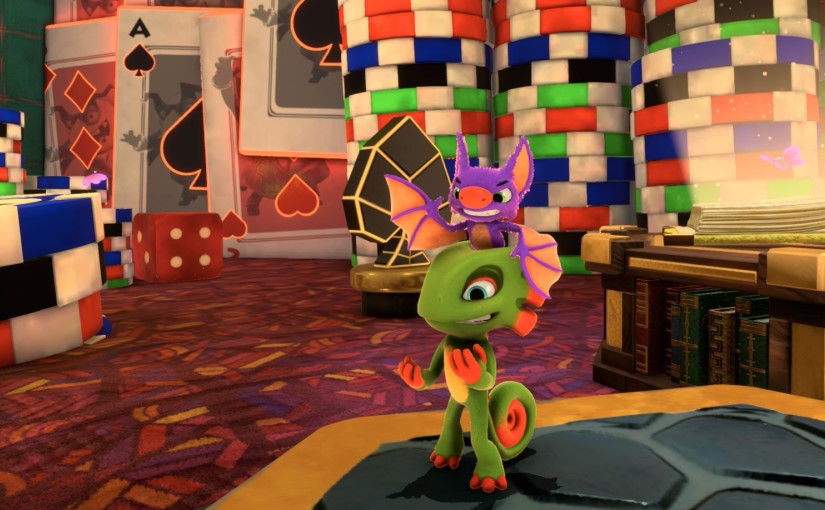
The game’s a delight visually, too. I do find that the mixture of terrain-types and mismatched rooms in Hivory Towers can come across as a bit messy and thematically overloaded, but the actual Tome Worlds are fantastic. The first area has a tropical theme (think jungle ruins over sandy beaches) and the second area makes things chilly with a snowy mountain vibe, but the locations soon get a bit more unusual with a gloomy marsh (which reminded me of my time with Spyro Reignited Trilogy a few years ago) and a very entertaining casino-themed stage. All of these worlds and more look great and are full of cool details, and the enemy and character designs are of a high quality and ooze personality.

This isometric section is located in the Glitterglaze Glacier stage, and is called the Icymetric Palace. Does that pun entertain you? Well, does it?

Yooka-Replayee will change up its gameplay style fairly often, just to keep things interesting. The aforementioned casino world offers up a smattering of casino-themed activities to interact with, including slot machines, roulette wheels, gigantic mini-golf (it’ll make sense when you see it), and a couple of quick heist-style sections where Yooka’s stealth abilities are put into action. Each Tome World also contains a retro arcade machine where players can earn pagies by controlling a dinosaur character in various 3D action-puzzle levels. There are bosses encountered in each stage, too, and these present enough of a challenge to make you think for a bit but all stop well short of frustration. All of these distractions are amusing at the very least, and I never found that any aspect of the gameplay got old or grating (well, maybe the mine cart sections once or twice).

All of these qualities, the visuals, the gameplay, the level design, the variety, combine to manifest an experience that’s easy to pick-up and easy to sink into, and as such, you can sit back and focus on absorbing those N64-era platformer vibes because the developers have done the hard work of making sure you’re never dragged out of the zone by some piece of shoddy game design or frustrating bug. It really does feel like Banjo-Kazooie for the modern age (with a healthy helping of that Viva Piñata vibe too, by the way – I see it in the visual design and hear it in the enjoyable and catchy music).

Yooka and Laylee are a charismatic pair, and the world is colourful and cosy, even the gloomy swamps and frozen wastes.

The thing is, does the modern age need a Banjo-Kazooie? Do modern gamers want collect-a-thon platformers? And if they do, will they even notice this one thanks to one of the most question mark-inducing names in video game history? I really hope that Yooka-Replayee does well, as it’s a great time, and the developers and publishers took it upon themselves to shun Nintendo’s Game-Key Card nonsense for the physical Switch 2 release. I’ve done my part by spending my Christmas money on a copy, finishing it with all collectibles, and then writing about it on the internet. Will you do yours?

Played on Switch 2

Ranking Every Game I Finished in 2025

In 2025, I finally got my rumpus room sorted out, and I managed to finish plenty of video games. It’s been quite the eclectic mix of old and new, and I decided that it would be fun to rank them. That’s what people like, right? Rankings? Obviously this is just my opinion, and could quite easily change if I looked at it on a different day, but what follows is my attempt to wrangle every video game I completed for the first time in 2025 into some kind of order.

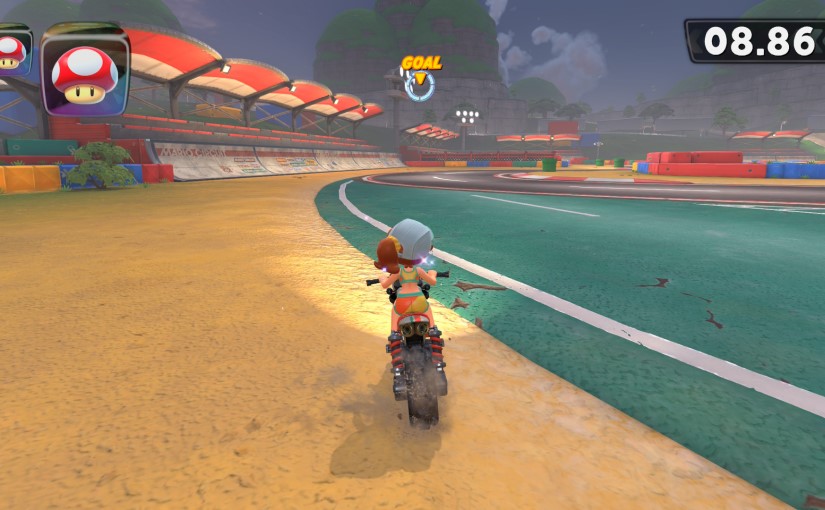
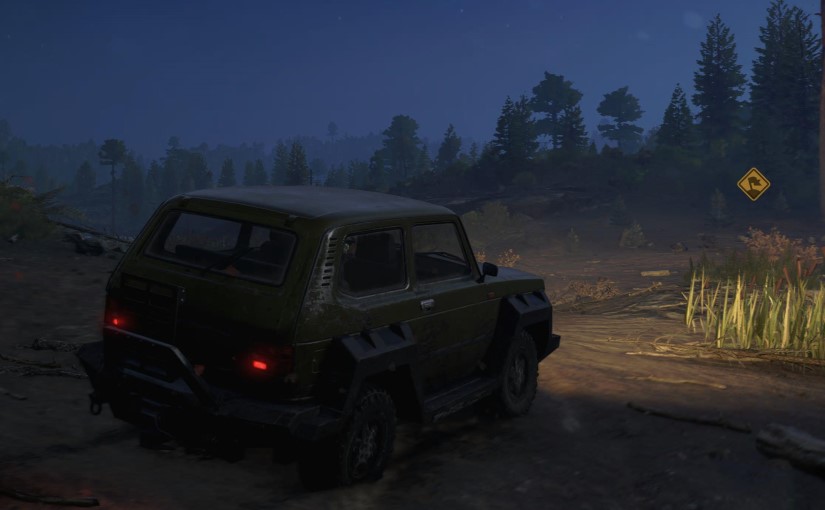
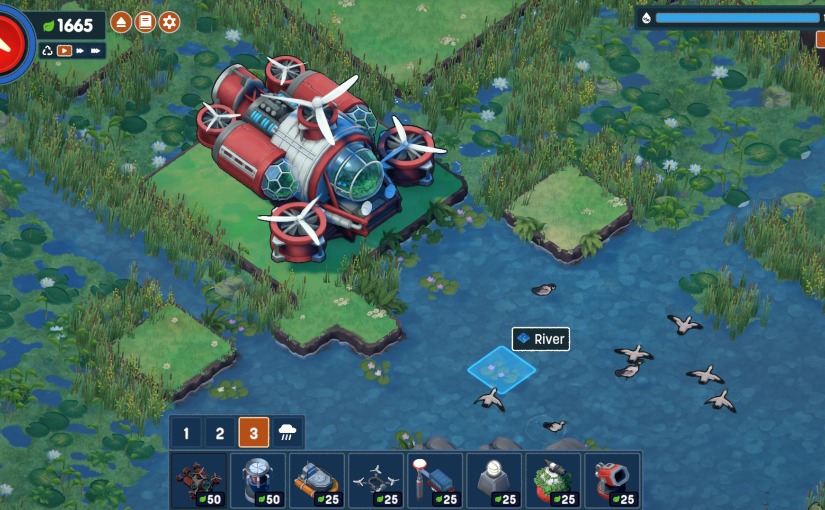
I’ll quickly mention Mario Kart World, RoadCraft, and Dorfromantik, because they’re not really the sort of games you can “complete” but all got a lot of play from me and were games that I played for the first time this year. RoadCraft is a MudRunner-type game where you find yourself in a big truck in the aftermath of a natural disaster and are tasked with repairing roads and pipelines and things, and Dorfromantik is a map-builder where you place tiles next to other tiles and gradually create an expansive landmass while trying not to run out of map pieces. I’m not going to describe Mario Kart World – you know what Mario Kart World is – but you could call these three my honourable mentions.

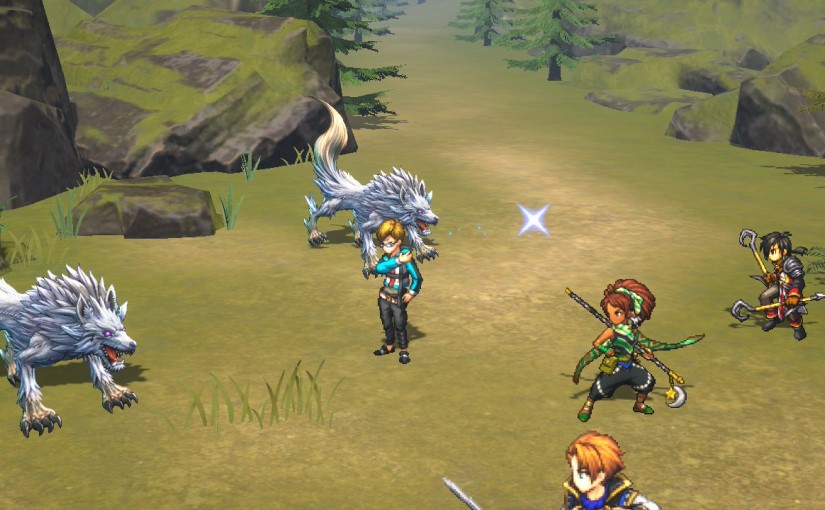
I’ll also mention Metaphor: ReFantazio, Ys X: Nordics, and Eiyuden Chronicle: Hundred Heroes. I enjoyed all three, but bounced off all three. Metaphor: ReFantazio became a bit of a slog (although I was suffering from excruciating back pain at the time and it hurt to even sit down, so that didn’t help) and Eiyuden Chronicle: Hundred Heroes was just too much faff, as I discuss here. Ys X: Nordics didn’t live up to it’s predecessors and I got distracted. I did still like all three games, though, and may well come back and knock them on the head in 2026.

Anyway, enough preamble, let’s get to the ranking! Watch out, here comes number 25!

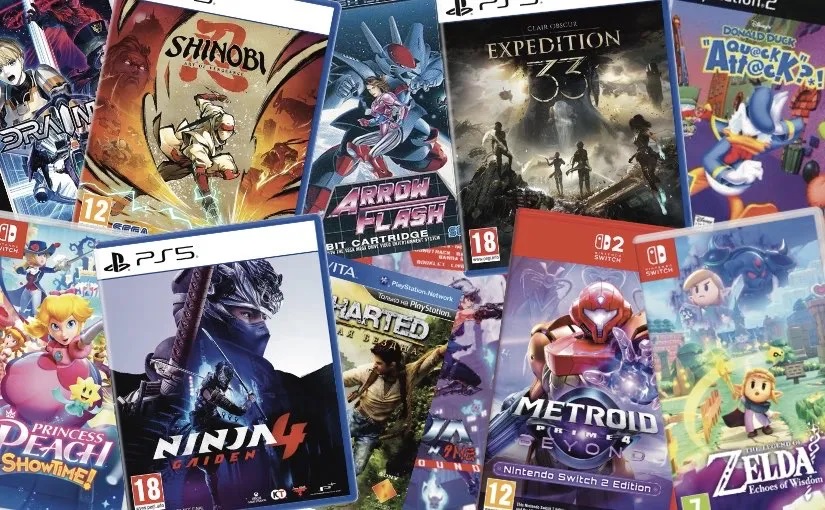
25. Princess Peach: Showtime! – Switch

I get that I’m not exactly the target audience for this one, and I don’t really remember what possessed me to buy and play it, but honestly, it was still pretty good even though it’s all the way down here at the bottom. If it was bad, I wouldn’t have bothered finishing it, after all. You play as the second best princess from the Mario franchise and collect different outfits that unlock various powers on your quest to save the theatre or something, and the more action-coded stages were a lot of fun. Some nasty performance issues and some less-interesting sections let this one down.

24. Exo One – PC

A short and sweet Steam purchase that I’d had on my wishlist for some time, this one puts you in control of a technologically advanced space sphere/disc thing and uses momentum-based controls to take you on a ride through beautiful, alien worlds. I smashed the campaign in an afternoon but enjoyed it. There’s a story behind it about a missing astronaut and some mysterious space anomalies, and when the pace was high and the mysteries were mounting it was a thrill ride, but it loses some places for the moments when the controls worked against me and the pace was brought to a near-halt (and it felt a little tiny bit like playing crazy golf).

23. Arrow Flash – Mega Drive

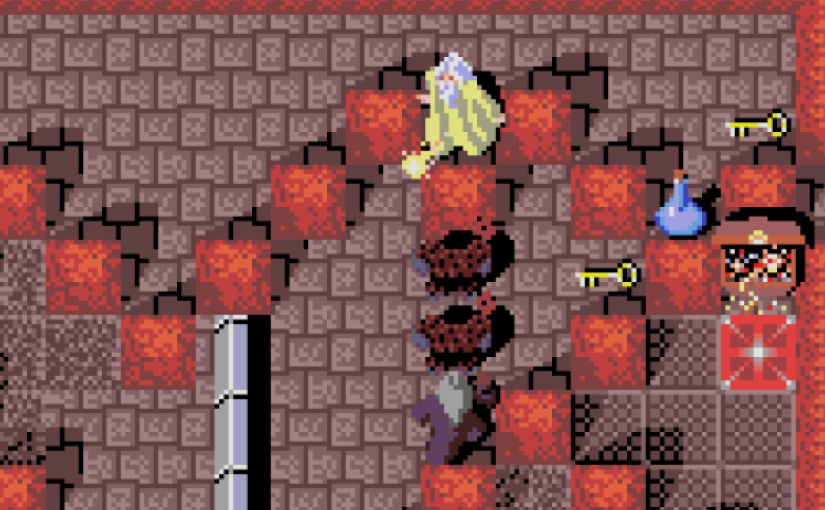
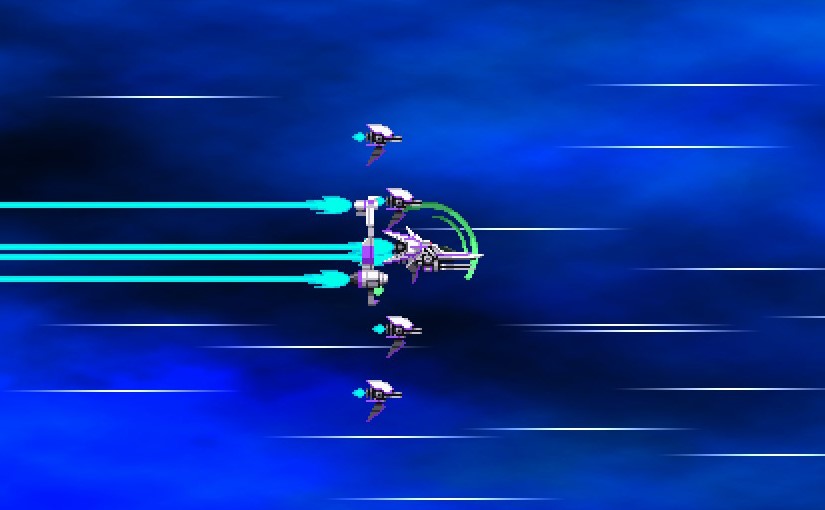
A classic shoot-’em-up that I played to completion on my actual Mega Drive in my actual rumpus room. Reviewers of the early ’90s weren’t too impressed, saying that it was too easy and could be completed in an hour or so. I can confirm that this is true, but I still enjoyed it, switching between spaceship and mech forms, and experiencing some trippy visuals and cool tunes. I wouldn’t say it should be mentioned in the same breath as some of the legendary shoot-’em-ups from that era – it’s an early Mega Drive game and it feels like one – but I still enjoyed it.

22. Untitled Goose Game – Switch

I finished it this year but I started it last year and never quite got to the end for some reason. I played it with my daughter this time around, and we enjoyed unleashing our inner aggravating, surly goose personas. Charming and fun, but occasionally a little fiddly and frustrating, this is another game that you can finish in an afternoon. Any game with a dedicated “honk” button is okay in my book.

21. Orcs & Elves – DS

A random eBay pickup that got a few days of solid gameplay out of me. A traditional, first-person dungeon crawler with orcs, skeletons, dragons, zombies, and all that other Dungeons & Dragons-adjacent stuff that gives off cosy, fantasy vibes. It was developed by id Software and published by EA, which I only point out because it just feels quite unexpected. Archaic by design and occasionally esoteric, it’s still an enjoyable and atmospheric experience that I’m glad I picked up.

20. Donald Duck: Quack Attack – PS2

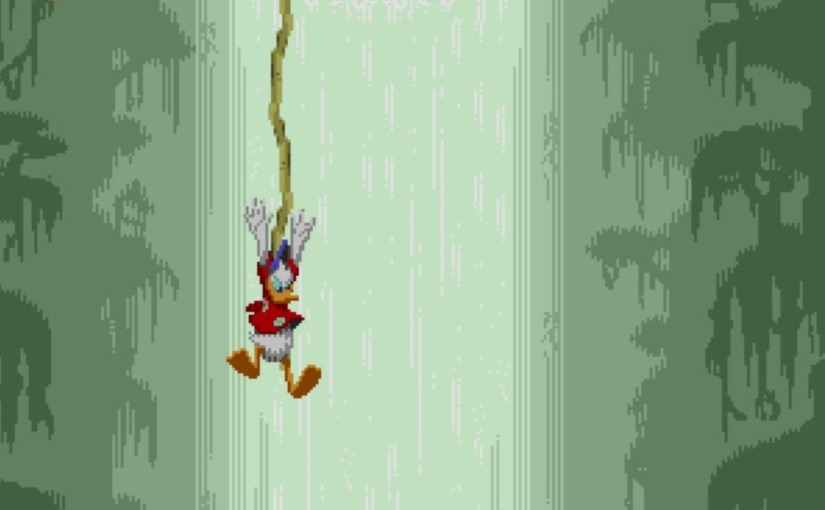
I’ve never really liked Crash Bandicoot. I find the games frustrating and find the character a little grating. I did, however, finish this random PS2 game that’s basically a Crash Bandicoot clone. In general I found it easier and more agreeable than Sony’s then flagship, and I’ll take the cantankerous waterfowl over the wacky marsupial any day of the week. Surprisingly good music, too. The game is known as Donald Duck: Goin’ Quackers in America.

19. The Precinct – PS5

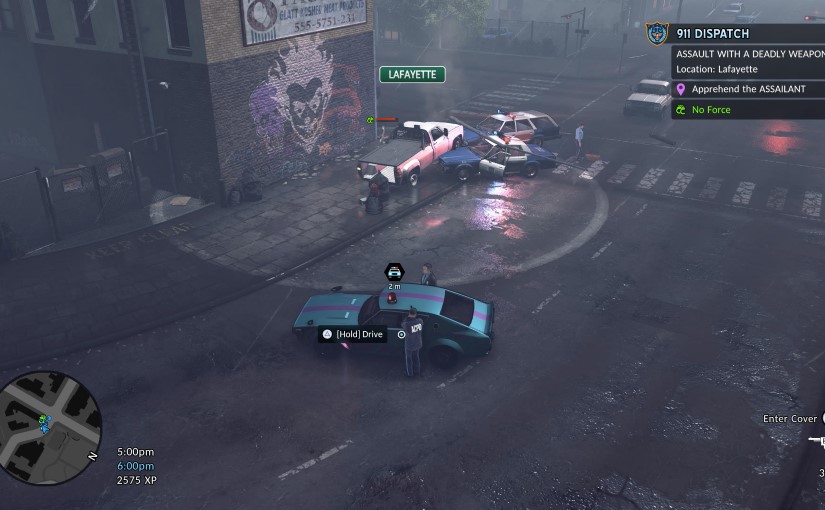
I did a Game Diary on it here and it was a gift from my daughter for Father’s Day, which makes it super special to me. The Precinct has a great soundtrack and a cool, retro top-down view that brings to mind the original couple of GTA games. When it works, it’s all delightful chaos and ’80s vibes, but it had a few too many bugs and random odd NPC behaviours that took me out of the zone. Still, it produced plenty of hilarious emergent moments that make me smirk to look back on.

18. Captain Toad: Treasure Tracker – Switch

A game that I love the idea of slightly more than I love the execution of, but I did still really enjoy this sentient fungus-based puzzler. The compact worlds are cosy and visually interesting, and the brain-teasing gameplay is on point, with lots of additional content made available in the Switch version. I did occasionally find it a bit slow-going and wished my little mushroom pal could run a bit faster, and when played in cooperative mode with my daughter we found that the motion controls could be a pain in the arse. Still great, though.

17. Broken Sword – Shadow of the Templars: Reforged – Switch

I found it especially difficult to rank this one as Broken Sword is one of my all-time favourite game series’ and a go-to for YouTube lets plays when I can’t sleep, but re-playing this in its modern incarnation I couldn’t help but notice where the cracks are starting to show, and feel that if I didn’t have the nostalgia and the pre-knowledge of what to do going in, I would’ve got frustrated and given up. Still, impeccable atmosphere, and George Stobbart’s voice is one of the comfiest in gaming for my money.

16. Uncharted: Golden Abyss – PS Vita

Now for a more action-based take on the globe-trotting adventure genre, as Nathan Drake is responsible for uncountable murders while George Stobbart is still on a big fat zero. This handheld iteration manages to take everything that’s enjoyable about the Uncharted franchise – the spectacle, the atmosphere, the fast-flowing, ever-changing gameplay – and shrink it down to handheld size. I didn’t always want to be fiddling with the touch-screen and gyroscope, however, and the smaller screen took away from the “blockbuster” feel the series is known for.

15. Kena: Bridge of Spirits – PS5

I wrote about this one here, but to put it more succinctly; it’s a somewhat Zelda-adjacent adventure with a Dreamworks-inspired visual style, surprisingly deep and difficult combat, and adorable little critters to locate and manipulate (and put hats on). It was graphically stunning at times and enjoyable throughout, but I didn’t feel much of a connection with the protagonist and the side characters. Still, a great experience from beginning to end.

14. The Plucky Squire – Switch

The short and quirky tale of a young squire kicked out of his storybook, this game delighted with its writing, charm, and Zelda-like gameplay. I finished it right at the end of the year to take my number of games completed (for the first time) in 2025 up from a nondescript 24 to a thematically pleasing 25, and thanks to its imaginative design, clever puzzles, and some amusing dialogue and visual storytelling, I had a very good time doing so. A humble but entertaining slice of wholesome and colourful video game fun. I wrote about it here.

13. Drainus – Switch

Honestly, I didn’t spend anywhere near as many hours on this one as I did the likes of Kena: Bridge of Spirits and The Precinct, but I did thoroughly enjoy every moment, and it was so nice to play a mechanically near-perfect shoot-’em-up with awesome graphics and music that I could actually get through. The best of the “short” games I played this year, Drainus definitely has a lot to offer for high-score chasers and self-challengers. I, however, just like the pew pew pew. I wrote about it in more depth here.

12. Super Princess Peach – DS

Probably my pleasant surprise of the year, I saw that a lot of contemporary reviewers were generally unimpressed with Peach’s first solo outing, but I found it to be a wonderful balance of accessible platforming, visual charm, neat music, and semi-sneakily hidden collectibles. Not too difficult but with some mildly challenging moments, this title kept me interested until the end and more than delivered on what I was expecting from it; a visually pleasing and well-crafted casual platformer experience.

11. Uncharted: The Lost Legacy – PS4

After having an agreeable time with Uncharted: Golden Abyss I decided to continue my Uncharted adventure by picking up this super-cheap and expertly-crafted thrill-ride and smashing the campaign over a few sessions. I enjoyed playing as Chloe for a change (and I always enjoy Claudia Black’s voice work), and found the set-pieces as exciting as always. I also appreciated the downtime, snooping around spectacular ruins and breathtaking vistas in search of treasures and trinkets. Short but very sweet, and with a nice ending where everyone enjoyed some pizza.

10. Super Mario Bros. Wonder – Switch

For my money, Sonic is the king of the 2D platformer. Having said that, I did find this endlessly inventive platform experience to be a fun and challenging ride. The Wonder Flower effects added such a surreal tone to the game that it always felt like anything could happen, and it let me play as Daisy, so that automatically puts it above the two Peach games I’ve already talked about. Daisy is the best princess, after all. A worthy way to kick off the top ten.

9. Ninja Gaiden: Ragebound – Switch

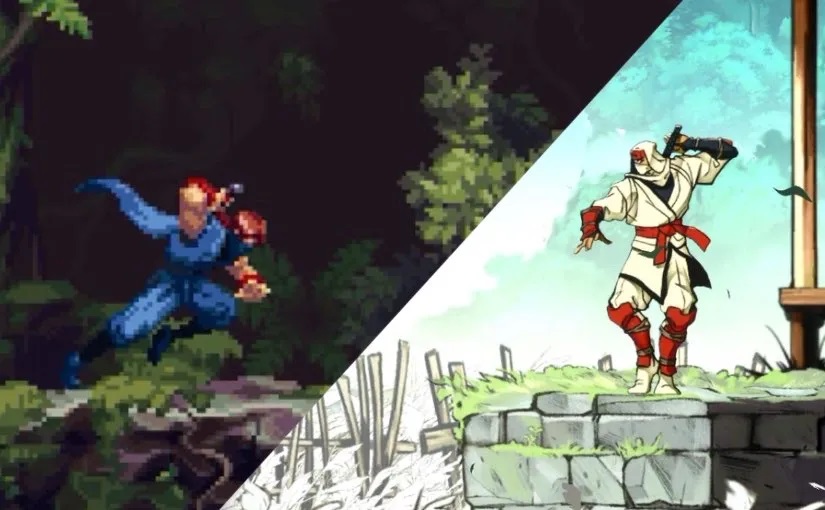
The first ninja-based game to appear on the list, this one stayed true to its NES roots while modernising the gameplay in a few key ways that resulted in a fun and challenging experience. I enjoyed the interplay between the two playable characters and found the bosses to be quite demanding, but wasn’t overly enamoured with the visuals and never felt too compelled to go back once I’d got the campaign in the bag. Still a top-quality, retro ninja adventure, though.

8. Ninja Gaiden 4 – PS5

This game should have been challenging for the number one spot but was honestly a little disappointing. The visuals are great, the combat is poised, tight, and brutal, and the violence is satisfying, but compared to Ninja Gaiden and Ninja Gaiden II it lacked variety and x-factor, and the new protagonist, Yakumo, came across as a socially-awkward emo-kid who all the female characters and some far-cooler male characters seem to have nothing but respect and adoration for despite his complete lack of charisma. It played brilliantly, but the game, like its hero, lacked personality.

7. Shinobi: Art of Vengeance – PS5

The triumvirate of ninja action games concludes with Shinobi: Art of Vengeance, which just won me over with its awesome presentation, animation, combat, and controls. The platforming was really solid too, and I enjoyed the Metroidvania-lite mechanics. An excellent return to the limelight for a classic Sega character that warmed the cockles, but some of the levels felt a bit underwhelming and some of the backgrounds felt a bit lacking in detail. I guess I’m still just a bit salty that the gross, body horror sections weren’t disgusting enough. I wrote about this game and Ninja Gaiden: Ragebound here.

6. The Legend of Zelda: Echoes of Wisdom – Switch

With Tears of the Kingdom and the Link’s Awakening remake still in my unfinished pile, I wasn’t betting on myself to get through this one, but the quirky gameplay and charm carried me right through to the end. I had a great time summoning creatures and items to help with traversal, puzzles, and combat, and adored the atmosphere and visual style. I’m pretty sure I played the entire thing through in handheld mode, and it really worked beautifully as a handheld adventure that kept me occupied for hours. I didn’t even mind the menu interface thing that everyone was complaining about. Good stuff.

5. Prodeus – Switch

The first game I finished in 2025 was this gem of a “boomer shooter”. I wrote about it here, and while I haven’t played it since knocking the campaign on the head in January, it’s definitely one I can see myself blasting through again in the future. Feeling somewhere in between Doom and Quake with a few mod-cons strapped on, Prodeus was an extremely enjoyable romp through sinister enemies and grimy stages overflowing with ominous atmosphere. It was just a really visceral old-school FPS that I look back on with great fondness. Top five material.

4. Metal Slug Tactics – Switch

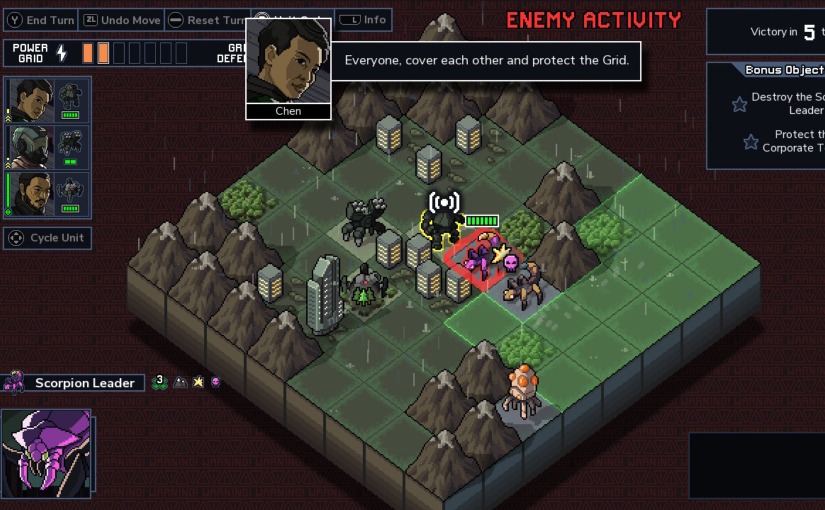
I’d read about this game (and watched a few videos) before it was released physically, and knew to expect an experience close to the excellent Into the Breach before sticking the cartridge in, so it had a lot to live up to. Thankfully, it turned out to be a very fun and finely balanced strategy roguelike with just the right amount of challenge. Full of personality, Metal Slug Tactics recreates the classic Metal Slug art-style admirably from an isometric perspective, and has some really cool music too. I often go back to Into the Breach, but now I have another option to sate that hankering for tactical grid-based goodness.

3. Metroid Prime 4: Beyond – Switch 2

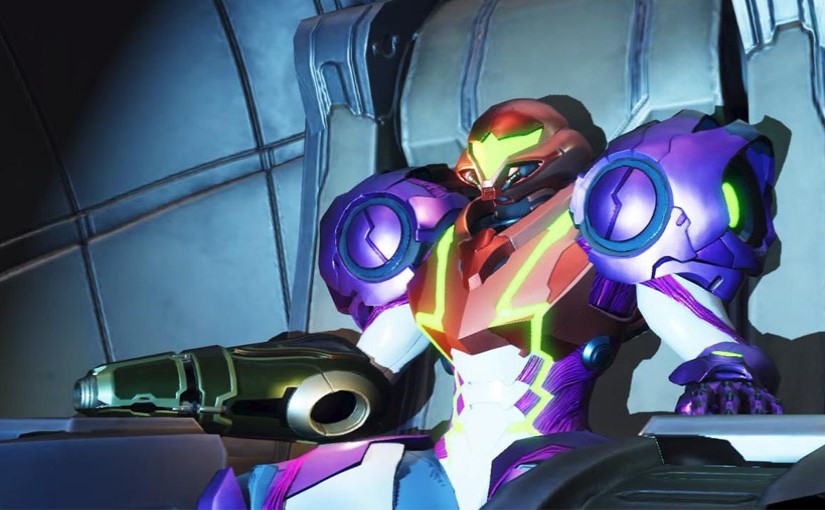
My final anticipated release of the year, it lived up to my expectations and provided a beautiful and atmospheric space adventure that had far fewer frustrating moments compared to Metroid Prime Remastered. I wrote about it in more detail here, but I found that a lot of the problems people are talking about online – like the radio buddy and the green crystal hunt – didn’t bug me anywhere near as much as they seem to be offending other people, and I found Samus’ latest outing to be a top-quality experience from beginning to end.

2. Prince of Persia: The Lost Crown – PS5

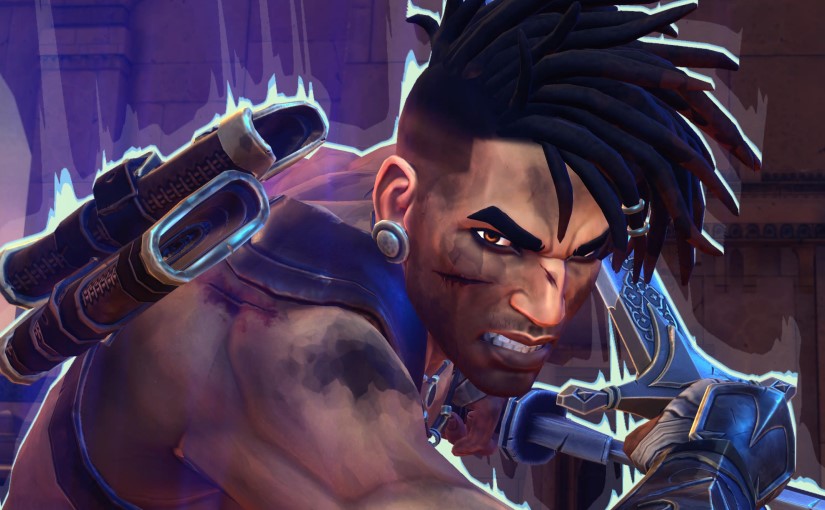
I never expected this to rank so high, but when your biggest complaint about a game is that everyone seems really tall compared to the protagonist, then you know you’re onto a winner (everyone does seem so much taller than poor old Sargon though, and it does really bug me because seriously what is up with that?). I did a game diary on it here, and I look back on that time spent with the game very fondly. Great combat, satisfying puzzle solving and progression, and an awesomely charismatic protagonist all combine to form a brilliant Metroidvania experience. It’s super-cheap, too.

1. Clair Obscur: Expedition 33 – PS5

Recent controversies from the Indie Game Awards aside, this has to be my GOTY, and I previously wrote about it here. A fascinating premise that was followed up on beautifully, gorgeous visuals, stunning music, and challenging gameplay that made the whole thing feel way more involved than your average turn-based RPG (not that there’s anything wrong with a traditional turn-based battle system). The passion of the developers is palpable throughout the game’s rollercoaster of a campaign, and I think it’ll live on as one of the true greats in years to come.

The Plucky Squire

A Real Page-Turner

I ended 2025 on a jaunty note, as far as video games go, at least. The Plucky Squire was added to my Christmas list on a whim and was purchased for me by my lovely wife, and over a few jaunty handheld gaming sessions undertaken in the time void known to some as the “Chrimbo limbo”, I saw the campaign to its jaunty conclusion.

If you haven’t heard of The Plucky Squire, it’s an indie game originally released in 2024 and developed by British studio, All Possible Futures, and concerns the titular squire being kicked out of the storybook he’s the main character in and attempting to save the day by exploring its pages and the outside world.

Many of the puzzles involve swapping words out from the book to have an effect on the environment. It’s a really neat idea that has loads of potential, but I don’t feel like it was explored to that potential.

The game is very “meta” in this way (in fact, the magic that the evil sorcerer, Humgrump, is using to cause trouble is referred to as “metamagic”), as the characters become aware very early on that they are part of a book, and many of the puzzles require players to think outside the box (or outside the book) to come up with creative solutions. Not that any of the puzzles were that hard. I never found myself stopping and scratching my chin thoughtfully for more than a few seconds, and I found all of the “glitchbird” collectibles in one play through.

The game will often stop to offer up some dialogue hinting at what the titular squire (who’s name is Jot, by the way) has to do to proceed, and there were times when I could’ve done without this, and would have rather the game let me figure things out for myself and hold back on stemming the flow. There’s also a recurring character that will give you more specific tips to progress, but you can ignore this fellow if you wish. He does have some fun dialogue, though, so sometimes I felt like I might’ve been missing out on an amusing quip or clever reference. You can’t have it all, I guess.

Sometimes Jot’s allies will fight alongside him, but sometimes they just follow passively.

The writing of The Plucky Squire is very pleasing on the whole. Generally, it’s presented as a kid’s storybook, but the writers definitely had some fun with the dialogue especially. The characters are all fairytale standards with some kind of unique twist, like a wizard who’s into EDM or a troll who’s a heavy metal drummer. The premise, writing, and dialogue combined to provide some legitimately fun and frivolous moments, and I actually chortled aloud a few times.

What about the gameplay, though? Well, I can best describe it as “Zelda-like”, in lots of different ways. When you’re exploring the book, The Plucky Squire feels like a SNES-style, top-down Zelda, and when you’re outside the book in the kid’s room, it’s reminiscent of the Link’s Awakening remake. Even Phantom Hourglass and Spirit Tracks feel represented with some of the creative puzzle solutions. There are also a few moments throughout The Plucky Squire where the gameplay will change drastically for a boss encounter. I won’t spoil too much, but if you’re a fan of rhythm games, side-scrolling shooters, and Punch Out!!, you’re in for a treat.

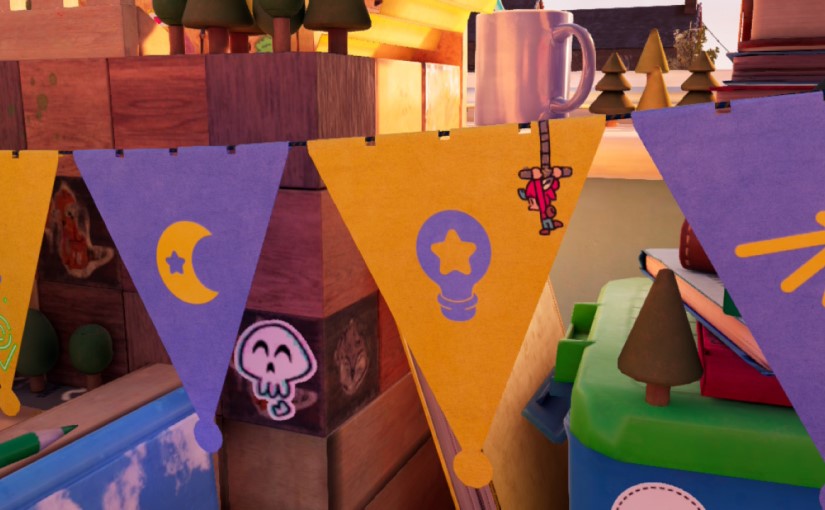
I now realise that I didn’t take any screenshots of 3D Jot in the real world. Oh well, I’m not going back in to get one, sorry. Here’s a screenshot of him on a mug instead.

Early on, The Plucky Squire felt like it was going to be a quirky but somewhat average experience that I’d play through and forget about, but by the end the gameplay changes, the charm, and the writing elevated it beyond this. I also found the segments where Jot was exploring outside the book, snooping around a kid’s desk and navigating paint pots, rulers, and birthday cards, to be extremely cosy. It almost took me back to my Micro Machines: Turbo Tournament 96 days. Are there any more games where you play as a tiny guy in a full size world? I’d like to explore this idea further. Maybe I need to track down a copy of Chibi-Robo!.

Played on Nintendo Switch 2.

Kizuna Encounter: Super Tag Battle

NEO-GEO Nostalgia

I’m not lucky enough to have a NEO-GEO floating about in the rumpus room (obviously, I really wish I did), and until recently I don’t think I’d ever even seen one. I am interested in lesser-known video gaming lore, though, and have watched many a video and read many an article on SNK’s surprisingly flat box of wires and circuit boards. I’ve also played ports of the various Metal Slug, Fatal Fury and The King of Fighters games that have sprung up on other consoles throughout the years, so it’s not like I’m completely clueless about the world of Shin Nihon Kikaku, just mostly clueless.

Kizuna Encounter: Super Tag Battle is a game that kept coming up in my research for articles and scripts I was writing. Most recently, it came up in my research for my as-yet unreleased Alien/Predator video game ranked list I put together for TripleJump. You see, a 2010, unlicensed mobile title called Predators: The Great Hunt swiped its backgrounds directly from SNK fighting games. I was first made aware of this when a contributor on tvtropes.org pointed out that the stage background from Krizalid’s arena from The King of Fighters ’99 was used, and this got me interested enough to do some sleuthing myself. Through a bit of reverse image searching I was able to identify a background from Kizuna Encounter: Super Tag Battle and, once I’d recovered from my distress at the brazen plagiarism on display, was yet again reminded just how frickin’ awesome this NEO-GEO tag team fighter looked.

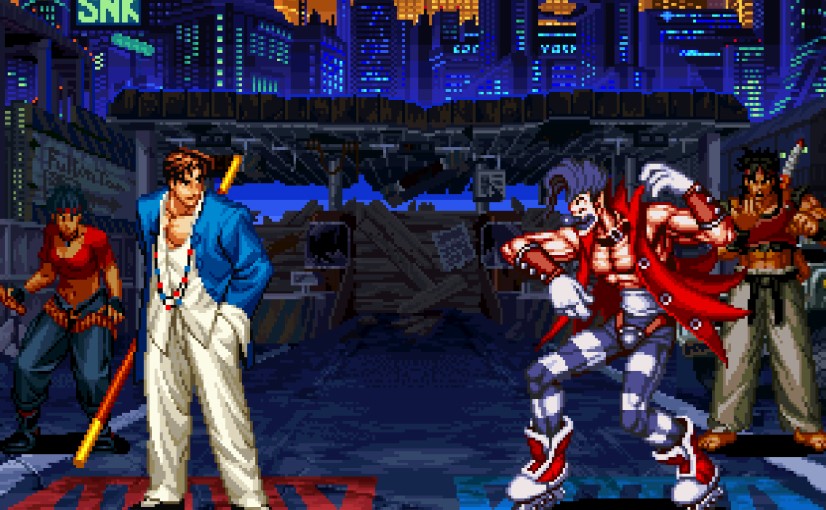
I adore the grimy city aesthetic. This stage reminds me of the scene in The Warriors where the gang are avoiding a bus filled with nut-jobs out for their blood.

Fast forward to the other day, and I’m needing to think of a game that was released on a non-Sega, Nintendo, Sony, or Microsoft console (and wasn’t Metal Slug – long story) that I could nominate into the Video Game Hall of Fame, and I thought “maybe it’s time to see if that Kizuna Encounter thingy plays as good as it looks”. A bit of cheeky emulation later and I’m glad to report that it does indeed play wonderfully, and is an all-round tasty slice of fast-paced, one-on-one, weapons-based fighting action.

Kizuna Encounter: Super Tag Battle is a sequel to another NEO-GEO fighter called Savage Reign, and lots of its controls and mechanics are lifted from Real Bout Fatal Fury. However, each combatant has their very own deadly weapon and the tag team mechanic is placed front and centre. It’s the tag team thing that really makes Kizuna Encounter stand out, as you’ll lose the bout if one of your characters goes down regardless of how much health your other character has left, and tags can only be made in a certain indicated section of the arena. This means that new tactics open up, like using quick tags to isolate your opponent, and dramatic struggles to get back to your tag partner become commonplace when things get dangerous. Combatants can regain some health while tagged out, too, so the game definitely encourages players to engage with the tag mechanic. I also like how your tag partner is visible in the background at all times, and will appear raring to go or sagging and depleted, depending on how much of a beating they’ve taken.

I love a pixel art night-time city-scape. I could look at it all day. All day!

I’m far from an authority when it comes to fighting games. I’m more interested in them for the cool characters they can offer and the spectacle they can present than I am for technical moves and combos. I button mash, I rarely block, and sometimes I even play them on easy mode. With all that out in the open so that you can take my opinion with the recommended amount of salt, I did really enjoy Kizuna Encounter. It was easy to pick up and within a few bouts I was able to unleash some pretty cool moves. There’s also plenty to master, and while I never got anywhere near anything resembling “mastery” during my time with the game, I definitely got better with a couple of roster members.

Speaking of the roster, it’s pretty bombastic. I had a lot of fun playing as Max Eagle, the big, axe-wielding American wrestler with a positive attitude, and some of the character designs are super-cool. Sho Hayate is the slick, hero type character, Gordon Bowman looks like an overweight M Bison cosplayer, and rollerblading clown-punk, Joker, could be a Streets of Rage mini-boss. There are even a pair of Mortal Kombat-style pallet-swapped ninja in Mezu and Gozu, the latter of which has some pretty nifty fire-based moves.

The two new characters that were added since the previous game are probably the highlights, though, as Rosa is an eye-catching and badass katana-wielder and staff-fighting police detective Kim Sue-il is the epitome of effortless suave. They both look great against the game’s stunning backdrops, and add to the overall vibe of urban cool.

The pallet-swapped ninja have water and fire attacks respectively. Reminds me of that other game. You know, Shinobi on the Game Gear.

Those stunning backgrounds were what brought me to the party, though, being a shallow, visual kind of fellow who likes looking at cool things. The pixel art on display is phenomenal, and every stage oozes that classic SNK artistry. Glittering skyscrapers viewed from below, sprawling cityscapes seen from above, run-down alleyways, cloudy docks, neon signs, grimy overpasses, and more all await those who are ready to brave the Battle of the Beast God Tournament, and every stage is fantastically atmospheric in its own way. This includes the final arena, a sinister shrine filled with eerie statues inhabited by the final boss, mysterious crow helmet-wearing bad guy, Jyazu. That’s the background that was nicked by the Predator game, by the way.

Like I said, I’m no authority on fighting games, or on the NEO-GEO, or on SNK in general, but I do know what I like and I like Kizuna Encounter: Super Tag Battle, and I wanted to write about it so that its wonderful pixel art could grace my humble web page. SNK really knew their stuff when it came to chucking pixels on a screen, eh?

Played Via Emulation.

Kena: Bridge of Spirits

Who’s Making All These Hats Anyway? 

Kena: Bridge of Spirits is a visually resplendent action adventure game with a Dreamworks-style aesthetic and a melancholy atmosphere set in and around a village haunted by regret-filled spirits. It was developed and published by Ember Lab, and was the studio’s first (and at the time of writing, only) game, and was originally released back in 2021. Players take on the role of Kena, a spirit guide tasked with going to a beautiful but seemingly deserted mountainside community and putting its various spirits to rest, and cleaning up some nasty corruption along the way.

All I’d really heard about Kena: Bridge of Spirits prior to playing it was that it had some cute little fluff-balls in it, and that it had a PS2-era action/adventure vibe. It slipped under my radar until I found a copy slumming it among the kids’ karting games and Switch code-in-a-box trash in my local B&M, and decided I’d pick it up. It sat on my shelf for a month or so before it became chosen, and the seal was broken.

Kena: Bridge of Spirits is at its prettiest when you’re surrounded by lush greenery in some winding forest path.

What awaited me was a very pretty game with a vague Zelda-like gameplay style and combat that initially seems simplistic but ends up being surprisingly deep and really quite difficult when it wants to be. Kena attacks with her magical staff thing, and over the course of the game will unlock other abilities like using the staff as a mystical bow and dashing through enemy attacks. The combat is kind of slow but feels responsive and is balanced well. I never got on with the parrying as Kena’s shield ability always felt very static and I would instinctively dodge and roll instead, but never felt held back by basically forgetting the shield/parry system existed. By the end of the game I was using the upgraded bomb attack to give me an edge against the difficult late-game bosses, and got into an enjoyable loop of chucking a shiny, blue bomb on the floor and then shooting it so that it would send little homing bombs off to attach to enemies, clearing out crowds of weaker foes and circumventing a certain boss’ ability to deflect bombs and arrows back at me.

All of these abilities have uses outside of battle too, and are used in various ways to solve usually-simple puzzles to progress. It’s during these exploration sequences when Kena: Bridge of Spirits feels most like a Zelda game, but Link never had a horde of up to a hundred little chubby fellas running around after him, did he?

Some hats look like they were foraged from the forest floor, others look like they were specifically made by skilled tailors and artisans. This raises questions.

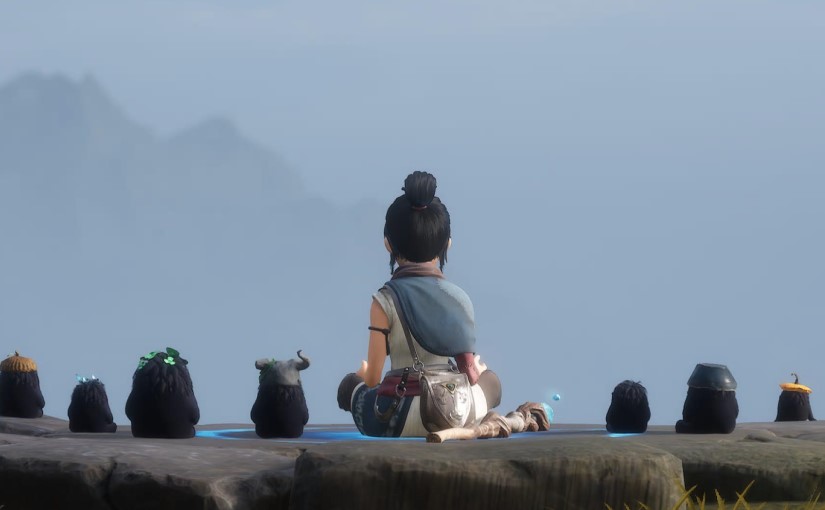
That’s where this game’s main selling point comes in, or at least its unique selling point. The Rot (which comes across as a weird name but I guess it’s derived from some real-world mythology in a way that would make it make sense) are small spirits that appear to live under rocks and in chests throughout the world, and when Kena sniffs one out, they open their big, dark eyes and smile an adorable little smile and tag along for the adventure. These guys will literally follow Kena around as well, dashing behind her along forest paths or swimming through crystalline waters in her wake. They’ll appear in pots or on ledges as well, and the “main” Rot – the first one that Kena finds and the one that is revealed to have extra-special story significance – will occasionally point out nearby secrets and puzzles solutions.

There are a hundred of these Rot to find, and all of them look and act like a cross between a Minion, a Kodama from Princess Mononoke, and some kind of forest Furby. You’ll often find yourself directing them around the game world, lifting blocks, tipping pots, and swarming around corrupted plants to help banish the “poison” from the world. They’re also useful in combat, distracting some enemies, damaging others, and occasionally being able to make use of nearby flowers to heal Kena.

Due to the fact that Kena exclusively wields a staff in melee, you’ll be dishing out a lot of firm bonks.

I’m not sure how much I like the Rot. They’re fine, and they’re cute, but they’re Dreamworks cute, and I think I’m kind of done with that vibe. Also, they all look exactly the same (although some are slightly larger than others) and I would always have a little pang of disappointment when I uncovered another identical Rot. Some part of me was always expecting them to be a different colour or something, I guess. At least you can put hats on them, and I did really enjoy finding hats and forcing the little guys to wear them. My wife and daughter were far more enamoured with the Rot than I was, and practically swooned when they saw the little guy in the dinosaur hat. I just thought they were mildly charming and an interesting way to interact with the puzzles and combat. I would like to tell you whether they’re implemented in a similar way to the minions in the likes of Pikmin or Overlord, but I haven’t played either of those games so I don’t know.

Kena: Bridge of Spirits often delighted me with its visuals. There are some truly stunning environments, especially early on when exploring lovely forest paths with dappled sunlight coming through the trees. This is an exceptionally pretty game that uses influences from a melting pot of Eastern cultures to create a fairly enchanting whole. I will say, though, that I didn’t really like the characters looking like they were lifted from a modern Pixar or Dreamworks movie with a somewhat lower budget. I may be wrong, but I felt like the animation, especially the lip-syncing and general mouth animations, weren’t of a high enough quality to sit comfortably with the visual style the game was going for, and thus I left a little put off when the characters were speaking.

That red flower in the background is bad and must be smushed.

I do wish there was a bit more variety in the locations as well. The village and its surrounding woodlands look amazing, but the game only really offers up a significantly different biome towards the end, and it would have been nice to have seen a bit more variety. During certain parts of the game the weather changes, and the woods might become dark and rainy or the village might have an ominous red sky overhead. These moments are awesomely atmospheric, but are reserved for a few short, cinematic sections and then you’re back to fine weather again. Maybe a weather cycle would have been nice, but I feel like I’m nit-picking at this point. Kena: Bridge of Spirits is a fantastic looking game but if you’re not big on woods and idyllic mountainside cabins, you’re not going to find much else to get excited about.

There were a few glitchy moments, but nothing to hurt the overall experience. Sometimes the Rot would glitch into the floor or flicker in and out of existence, but given that they’re tiny magical beings who appear wherever they like, these moments were acceptable (I could tell when they were being glitchy rather than being magical, though, before you start). Kena also does the thing where if you jump onto a rock or bush that she can’t stand on she’ll kind of float around awkwardly against invisible walls and floors until she eventually lands somewhere she’s supposed to be. There are also plenty of areas where, if you pay attention, you’ll notice that she’s not standing on the ground but levitating a few inches above it. In such a lavish looking game, these little moments can take you out of the world.

Masks play an important part in the symbolism and gameplay of Kena: Bridge of Spirits. Did I mention the masks?

But what a world it is, and I had a great time exploring it. The game is fairly short and the world is fairly compact, but the whole thing is wonderfully designed, and the combat and exploration are both of a high enough quality that you should be entertained throughout. The story is fine but the atmosphere is occasionally enchanting, and the soundtrack accompanies the whole thing perfectly. The game can be difficult and the boss fights can feel epic, and there are plenty of collectibles (and lots of hats) to find to keep you busy. Also, there are optional combat and platforming trials if you like that sort of thing, as well as an unlockable New Game+ and multiple difficulty levels.

Kena: Bridge of Spirits is a great experience that doesn’t outstay its welcome and offers up a vibrant world and some cute critters to explore it with. If the idea of strolling through gorgeous woodland, digging up big-eyed little Troll-looking things, fighting baddies made out of gnarled wood and placating some non-spooky ghosts sounds interesting to you, get down to your local B&M and buy yourself a copy. Pick up some sweets or some Jammie Dodgers while you’re there maybe.

Played on PS5.

Metroid Prime 4: Beyond

Sylux, Psychics, and Sidekicks

There’s something about the Metroid series. It’s a franchise that I’ve been interested in for a long time but didn’t leap into until Metroid Dread. Sadly priced out of most of the earlier entries into the series, I did consume lots of content about Metroid lore and history following my introduction to Samus Aran’s atmospheric adventures. I then jumped into Metroid Prime Remastered, and have now finally finished my third game in the franchise with the recently-released Metroid Prime 4: Beyond. I wrote about Metroid Dread here, and did a game diary on Metroid Prime Remastered here.

Nintendo’s Alien-inspired sci-fi series is fascinating to me, as its mixture of the Japanese giant’s bright and breezy style and the horror and isolation taken from Ridley Scott and James Cameron’s pair of masterpieces creates a beguiling whole. Some of the enemies are pretty creepy, and many of the bosses are incredibly monstrous, but much of the actual horror found in Metroid is inferred from background details and logbook entries. Instead, Samus’ adventures are more tightly focused on atmosphere and that all-important sense of isolation.

I tried the mouse controls and it does work well, but I soon settled on the standard controller-style method.

So, why does Metroid Prime 4: Beyond have a super-talkative companion and radio buddy, then? Honestly, I don’t think the companion characters are that much of an issue. Mackenzie, the one that everyone has the specific problem with, is kind of annoying at first, but he’s okay in the long run, and I always felt that the side-view Metroid games did the isolation thing better anyway. If you’re put off trying Metroid Prime 4: Beyond because of the complaints you’ve heard about Mackenzie and pals, don’t be, you and Samus will still have plenty of chances for alone time in the depths of some godforsaken heck-hole, way out of radio contact from your bespectacled chaperone.

I actually managed to 100% my play-through of Metroid Prime 4: Beyond. The item completion kind of happened naturally, and then I used the internet to find the last few scans before I took on the final area. I feel no shame at this; I don’t have time to piss about aimlessly looking for something called a “blow hopper” that spawns in a single location beneath a volcano, I had to ride my motorcycle around a desert smashing through a seemingly unlimited phalanx of sparkly green crystal formations. That was my way of introducing the other biggest annoyance I’ve seen people bring up about this game, by the way; the great crystal hunt. Again, I didn’t mind it, and spent an hour before my push into the game’s final sequence riding around in a zen-like state and mopping up the last of those crystals in one fell swoop. It was okay, and it didn’t take too long, even with Mackenzie sticking his oar in over the radio link from time to time.

This game has its own share of excellent tunes, but the Phendrana Drifts music will always pop into my head when looking at vistas like this.

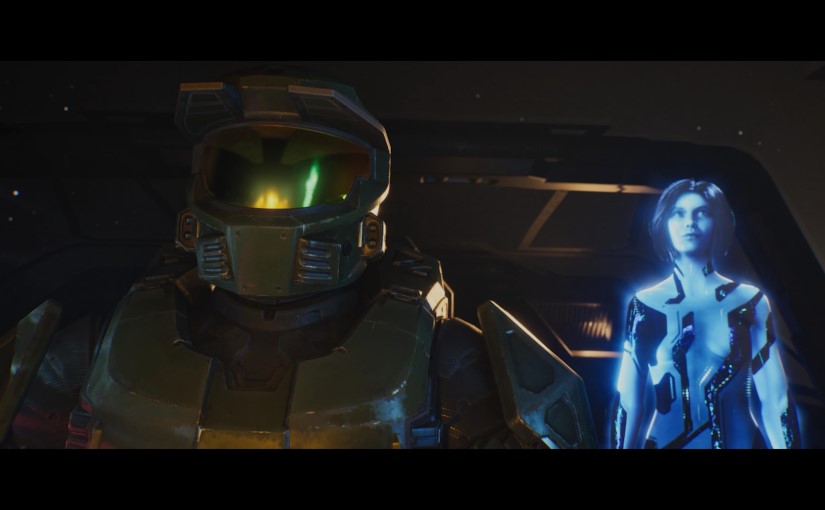
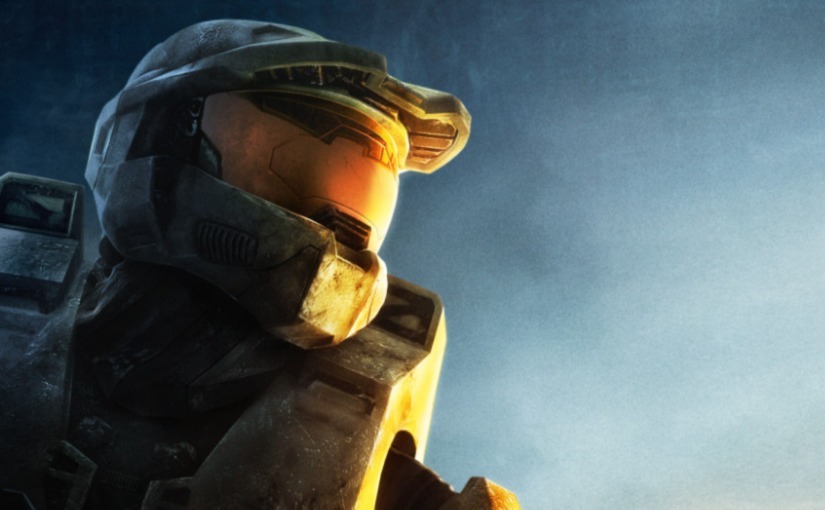
Right, enough babbling, let’s start the “review” already. Metroid Prime 4: Beyond looks phenomenal, and uses its rich, mystical colour palette to paint a lively and awe-inspiring fantastical world. At times it reminded me of the awesome sci-fi art of the sixties, seventies, and eighties by the likes of John Harris and Manchu, at times it reminded me of James Cameron’s Avatar series of movies, and at times, yes, it did remind me of Halo. It does have its own thing going on though, and the environments look incredible whether you’re overlooking sweeping vistas and epic sky-boxes in the desert hub area or booking it through tight corridors filled with secreted alien goop at the bottom of a vast mining complex.

I was playing on the Switch 2 in Quality Mode and the game consistently looked fantastic with no noticeable drops in performance. Occasionally I would notice a few pixelated details though, and mostly on the helmet visors of the small squad of Galactic Federation soldiers Samus encounters, or on the hammerhead shark-like face of the super-beefy allied android, VUE-995. On the rare occasions when the squad’s visors open and you see their actual faces, there are no such issues and there are some high quality facial animations on show, but the fuzziness on their helmets is noticeable on occasion and can be a minor immersion killer. For the most part though, this is a mighty fine looking game.

So, what actually happens to Samus when she’s a ball?

The gameplay is also on point. There’s nothing very new to report if you’ve already played any of the Metroid Prime games (meaning that the new “psychic” powers Samus attains aren’t actually very different from her usual abilities in practice) but if you’re new to the Metroid party, expect a super-smooth FPS experience with a slower, considered pace, a fair helping of puzzles and back-tracking, and a high-concept sci-fi feel, favouring elemental-based weapons over Aliens-style modern solid round firearms. Players are expected to engage with the world by way of scanning critters, lore items, and enemies, and by exploring every nook and cranny for upgrades. Puzzles range from simplistic to devious, but progress-blocking brainteasers never offer up too much of a problem, meaning that the pace is rarely harmed.

Comparing Metroid Prime 4: Beyond to Metroid Prime Remastered, I’d say that this game is more straightforward in its level design. There are also fewer aggravating enemies, and most players will have an easier time with the general aggressive flora and fauna (as well as the mysterious “grievers”) that make up most of the combat. One or two of the bosses put up a legitimate fight, and the final confrontation is suitably challenging, but overall, Beyond is an easier game than Prime Remastered. I didn’t mind this at all, as I did find that Prime Remastered started to wear on me at times, and the fission metroids that were encountered regularly towards the end of that game were a frustrating pain-in-the-arse to fight. There’s nothing like that here, and this is alright with me.

This is a Griever. The game’s story definitely has a light theme of grief, mourning and loss, which is unsubtly hinted at with some of the species names.

The weapons and gadgets are as fun to use as always. By collecting enough of the infamous green crystals Samus can upgrade her basic cannon, and this upgraded version feels a lot more satisfying to use. The super-charged fire shot is also a lot of fun to unleash, and the super-charged thunder shot is an absolute dream, sending a devastating beam of erratic, electric energy that homes in on every enemy nearby and erases them in a visual feast of spectacular obliteration. It almost feels overpowered, but you’ll have earned it by the time you get it, and it uses a fair chunk of ammo, too.

Not that I ever really had to worry about ammo. Well, not until the very last battle at least where I was spamming the final suit’s overshield ability which inexplicably uses your missile supplies to power up. Metroid Prime 4: Beyond locks its hard difficulty until you’ve completed the game on normal. I haven’t tried it yet, but apparently it causes save points to only restore health instead of health and ammo, so I suspect that this, along with the generally tougher enemies, means that ammo conservation comes into play a lot more if you’re brave enough and time-rich enough to go through another play-through on hard mode. I won’t be doing it, I’ve got other games to play. Those last few bits of concept art in the gallery will have to stay locked, I’m afraid.

So, should I be getting attached to these guys or nah?

I really enjoyed Metroid Prime 4: Beyond. Its stellar art direction, memorable musical accompaniment, and tried and tested gameplay and progression made for a very satisfying and compelling experience. I found the supporting cast likeable (even Mackenzie by the end) and they were used sparingly enough that the sense of isolation still had its time to shine. I enjoyed the boss fights and felt comfortable with the controls, and I only occasionally got a bit exasperated with the back-tracking and the more fiddly areas (like some of the morph ball sections in the powered-up bike factory).

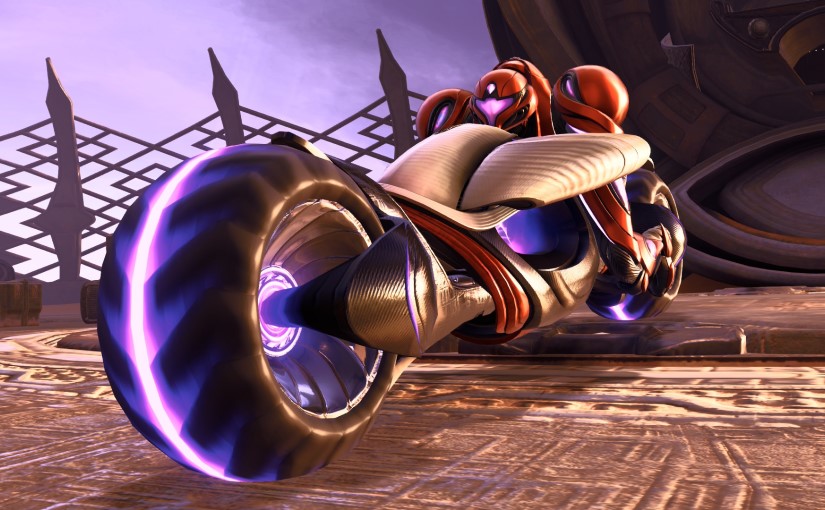
Speaking of bikes, I’m a sucker for a sleek, futuristic motorcycle design, and Metroid Prime 4: Beyond does not disappoint in that regard. Vi-O-la, as Samus’ glamorous, metallic steed is known, is a highlight of the game, even if you’ll mostly be riding it around empty desert hunting down those blasted green crystals. I like a sci-fi bike, and Vi-O-la is a sci-fi bike that I like.

As a self-confessed Johnny-come-lately to the venerable Metroid franchise, Metroid Prime 4: Beyond gets an enthusiastic thumbs-up from me. Sleek, slick, and exceedingly pretty, Samus’ most recent outing didn’t outstay its welcome and kept me interested throughout, never once becoming a chore, even when I was filling the crystal receptacle so that I could get a special memory fruit or whatever that bit was all about. Look, just stop being such a blow hopper and give it a try, okay?

Eiyuden Chronicle: Hundred Heroes

A Hundred Hours of Procrastination

My first impressions of Eiyuden Chronicle: Hundred Heroes, Yoshitaka Murayama’s 2024 spiritual successor to the Suikoden series, were exceedingly positive. Retro but in the right ways, Eiyuden Chronicle has all the hallmarks of a fun and fascinating, reasonably challenging, super-cosy JRPG experience, but my initial positivity was curbed somewhat by some mechanics and gameplay directions that caused the game’s pace to almost grind to a complete halt, and while the lengthy campaign is still soaking up plenty of my precious gaming time (I think I’m about halfway through the story right now), I’ve been finding it a bit of a chore to get through of late.

The early party – I’ve moved on from all of these guys now (except protagonist, Nowa, of course), but a couple of them still live on in my memories.

You see, Eiyuden Chronicle: Hundred Heroes tasks the player with recruiting over one-hundred “heroes” to the player character’s faction, many of which are capable of taking part directly in battles. If you’re like me, you’ll feel obliged to locate and recruit every single one of them. This is fine when it’s just a case of locating a more colourful and detailed sprite in one of the various settlements or dungeons dotted around the map, realising that this means it’s likely a recruitable character, and doing a quick quest to get them on board, but many of the characters are hidden behind lengthy side activities, and this is where my problem lies.

The in-game card game is fine, but that doesn’t mean I want to play it for hours on end. I’m really not interested in playing the Bakugan rip-off (give me “Tin Pin Slammer” from The World Ends With You any day of the week). Fishing is an RPG staple at this point but Eiyuden Chronicle’s take on the noble pastime is hardly riveting, and the saga-like cooking “mini-game” and side-quest can get scraped directly from the plate and into the bin, thank you very much. I want all of the characters though, so I guess I’ve got to engage deeply with all of the above. What was that about a quest to save the free nations from a scheming noble wielding the full power of the Empire’s armies? I can’t remember, I’ve been so busy miserably playing with my little spinning tops that the main story feels like a barely-remembered dream.

Secondary protagonist, Seign, gets his day in the limelight.

The actual RPG gameplay of Eiyduen Chronicle: Hundred Heroes is great; the graphics are pleasing, the character sprites are awesome, the music is lovely, developing your own town and castle is actually a worthy side activity, and the actual battles are fun. I was concerned that the vast number of recruitable characters would just result in a whole host of sidelined party members who never get the chance to shine, but thanks to the guild missions and the odd larger-scope battle where party members act as lieutenants for squads of soldiers, those unappreciated companions will still pop up here and there even if they never get a chance to do a dungeon delve with the protagonists.

Sure, it has its share of jank, can occasionally feel sluggish, and has some archaic systems, but it’s all part of the old-school charm. The full package is very positive, and classic RPG enthusiasts are sure to have a great time. However, as an adult with a wife and a child, a job, friends, other hobbies and other games to play, I like it when video games respect my time. I don’t have a problem with long games, but only if they’re naturally long and don’t feel padded out by backtracking and faff. If you want to get all of the potential party members and town helpers, Eiyuden Chronicle is very much padded out by backtracking and faff.

Sometimes, Eiyuden Chronicle: Hundred Heroes can really nail those cosy RPG vibes.

The card game is fine, and I wish it was the only minigame included. It can be a bit of a time-sink, but the pacing of the adventure would have been so much more agreeable if it was the only time-sink. Get rid of the egg-monster races that feel completely superfluous, get rid of the Bakugan-like “Begioma”, because the characters it introduces feel out of place and take away from the game’s more serious story aspects (and also the actual minigame is boring), and please, for the love of all that is sacred, get rid of the cooking side-quest.

There’s this recruitable chef character, you see. His name is Kurtz and he can provide the party with stat-boosting meals. This is fine, but he also comes with a completely nonsensical and lengthy side-quest where various rival chefs (often with completely ridiculous voice acting) will turn up at the inn demanding a cook-off. What follows is a “mini-game” where you just have to tap a button a lot, and a food-tasting session that takes far too long to get through and is almost completely random as to whether you’re going to win or not. A waste of my precious time, but if I want all the characters, I’ve got to engage.

Today’s main course is a freshly prepared helping of “I don’t care” accompanied by a generous side-dish of “please just leave me alone”.

For me, this is Eiyuden Chronicle’s main downfall; if you want to recruit all of the characters (and why wouldn’t you? It’s kind of the game’s thing) then you have no choice but to engage with all the nonsense, and the story’s pacing suffers hugely, as will your enjoyment level. A perfect example of a game that does too much, Eiyuden Chronicle: Hundred Heroes is great, but it could have been so much better if it was a bit … less.

My intention with Eiyuden Chronicle from now on is to play it sparingly when I have a bit of free time and maybe get through the second half gradually in between other games (like the upcoming Metroid Prime 4: Beyond), but when you only have an hour or so spare for a session and you check off another two or three card battles and then find another goddam rival chef waiting for you at the inn it’s way too easy to lose this hour without engaging with the campaign or even with the battle system once.

The game will often require certain party members to be present. Marisa and her kangaroo pal probably wouldn’t have made it into my main team otherwise.

Eiyuden Chronicle: Hundred Heroes looks set to become one of my most-played games of the year, but I kind of resent it for this. When I think that I’ll have sunk more hours into it this year than I sunk into the likes of Clair Obscur: Expedition 33 and The Legend of Zelda: Echoes of Wisdom I find that thought distasteful, as those games were far more worthy of my time. I still like Eiyuden Chronicle, I really do, but it’s just not designed for a busy, popular, handsome man-about-town like myself. If you have a job, a significant other, or some semblance of a social life, maybe don’t get involved with this one.

Played on Nintendo Switch 2