
Gravity Rush 2

Falling Blissfully Upwards

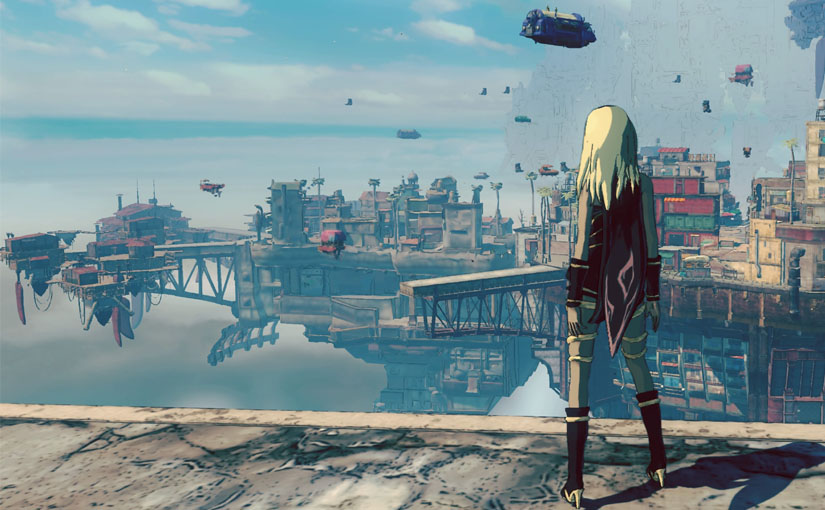
All great games have high points. Those peaks in the action, the memorable bits that give a title its identity. Sometimes those moments are in the gameplay; when pulling off a killer move or surviving a dangerous encounter. In other games, it might be a story beat, a great plot thread building to a cinematic crescendo, or maybe it’s in that moment of down-time, in which you really get to soak up the atmosphere of the world the developers have created. In Gravity Rush 2, it’s in the simple act of getting from A to B.

It has all those other moments too, but the sheer joy of upending gravity and shooting protagonist Kat from one end of the majestic, floating city of Jirga Para Lhao to the other is utterly unique. That initial sensation of weightlessness followed by a shift in gravity and an exhilarating burst of speed, coupled with the stunning visuals and atmosphere of the world, make basic movement in Gravity Rush 2 more fun than many games can muster in their entirety. Does this seem like an outlandish claim? Not to me. At it’s best, Gravity Rush 2 is a kinetic masterpiece, but let’s see what else it has to offer.

The player takes on the role of Kat, a mysterious girl in a strange world. Kat is a refreshingly upbeat character. She sees the best in everyone and refuses to be brought down, and harbours a burning desire to help people and make the world a better place. Despite these nauseatingly saccharine personality traits, she never drifts into annoying or cluelessly naïve, managing to stay adorable throughout.

As you may have guessed, she has powers over gravity as well. These powers are provided to her by her cute and mysterious cat companion named Dusty, who seems to be formed of negative space, and floats along for the ride. Kat can fall through the air in any direction as she adjusts the pull of gravity around her, and there are endless opportunities for exhilarating exploration as you run up the sides of buildings, float about the underside of docks and archways, and launch Kat off into thin air just to see what’s on the other side of that cloud. The world is bright and beautifully designed, a fascinating mix of cultural influences from around the world suspended on floating islands in a dazzling sky.
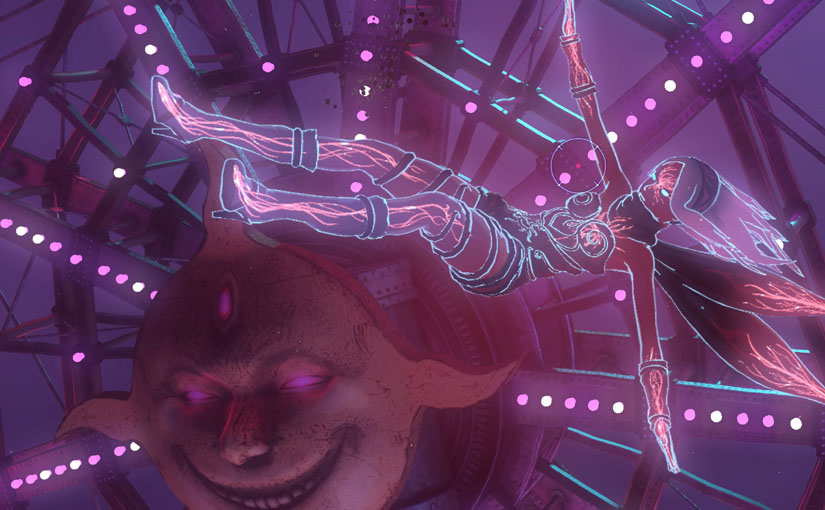
Kat’s appearance changes when she starts manipulating gravity, switching from “cute girl with cat” to “godlike supernatural being” in the blink of an eye.

Changing up a gear from the PlayStation Vita original, Gravity Rush 2 also gives Kat two additional gravity styles, which affect her levels of weightlessness and how hard she can smash into things. The light and airy lunar style increases Kat’s speed and jumping ability, while the weighty Jupiter style enables her to deal more damage as a trade-off for manoeuvrability. The combat predominantly consists of airborne battles with sinister, formless entities called Nevi. However, hapless, ground-based soldiers and the occasional boss fight offer some variety. The combat is fine, and at its best can feel spectacular and impactful, but if the camera doesn’t feel like cooperating that day, it can start to become a little too infuriating for comfort.

The struggling camera is Gravity Rush 2’s only real downfall. You can approach any location from any angle at any time and change direction in a heartbeat, and this can result in occasions where Kat and the camera just don’t get along. It’s not unusual to find yourself exposed in combat as you desperately try and search for the nearest enemy, or completely baffled as to which way is up or down following a camera angle flip because you got too close to a corner. It feels like the developers did the absolute best they could with the camera, but given the nature of the game and the sheer freedom of movement, there were always going to be times when it just couldn’t keep up with the action.

That aside, Gravity Rush 2 is an endlessly charming, often breathtaking and beautifully presented game. The story is fun and unusual and occasionally emotional, and provides some nice surprises for those who are invested in Kat’s murky origins. The game world of Jirga Para Lhao initially seems to be similar in size to Hekseville from the Vita original, but when Hekseville shows up in full part-way through as a completely explorable (and beautifully visually-updated) new area, that preconception gets blown out of the water. Massive, endearing, surprising, and full of unique gameplay, Kat’s gravity-defying journey is a joy to experience. If you put Gravity Rush 2 into your PlayStation and float away into it’s artistic and mysterious world, you won’t want to come back down.
Immortals: Fenyx Rising

It’s All Greek to Me

I went into Immortals: Fenyx Rising knowing the Ubisoft open-world games only by their reputation. The likes of Assassin’s Creed, Watch Dogs and Far Cry all represent gaps in my otherwise extensive gaming knowledge, and this dive into a bright and breezy imagining of ancient Greece is my first contact with Ubisoft’s house-style. It’s an outlier; a title that risked a visual style that doesn’t tick all the triple-A action game boxes. You could almost call it unique, but Nintendo would have something to say about that – there’s a certain breath of the wild about it that cannot be denied.

Before we get into all that, though, the first thing to note about Immortals: Fenyx Rising is how pretty it is. The art style is bright and abundant, with attractive, expressive characters, spectacular sky-boxes and lush vegetation. The content is similarly bright and breezy for the most part. Far from a stuffy retelling of the classics, Immortals treats Greek mythology like a Saturday morning cartoon, albeit a surprisingly accurate one. It’s far more rooted in the actual subject matter than Disney’s Hercules, for example, and even uses the less-popular Greek spellings of familiar names like Hephiastos and Herakles.

Many of the jokes rely on the player having a decent knowledge of the subject matter. If, like me, your knowledge of Greek mythology is somewhat limited, you may find that some of the quips go over your head. I remember enough to know that things can get messed up, though. Immortals leans into this in a humorous way, slyly referencing the murder, cannibalism and incest while keeping things family friendly, on the surface at least. Almost every scene is treated with a tongue-in-cheek approach, and the pantheon rarely receives the dignity it deserves. War god Ares, for example, is initially found in the body of a chicken, with all of his gusto and confidence drained away. He also has a bit of a thing for Aphrodite, but then, don’t we all.

The world of Immortals is beautiful, but artificial. Landmasses poke out of the sea at odd heights, suspended on sheer cliffs whose only purpose is to hinder exploration until the player earns stamina upgrades. Plateaus jut haphazardly, inhabited by token packs of boars or bears, vast temple complexes are built across areas where no regular human could easily reach them. Villages and ruins are situated and laid out in a way that serves the purpose of the nearby puzzle, but gives no indication of a living, breathing world. Immortals eschews any concept of world-building and immersion in favour of a game map that serves the gameplay only.

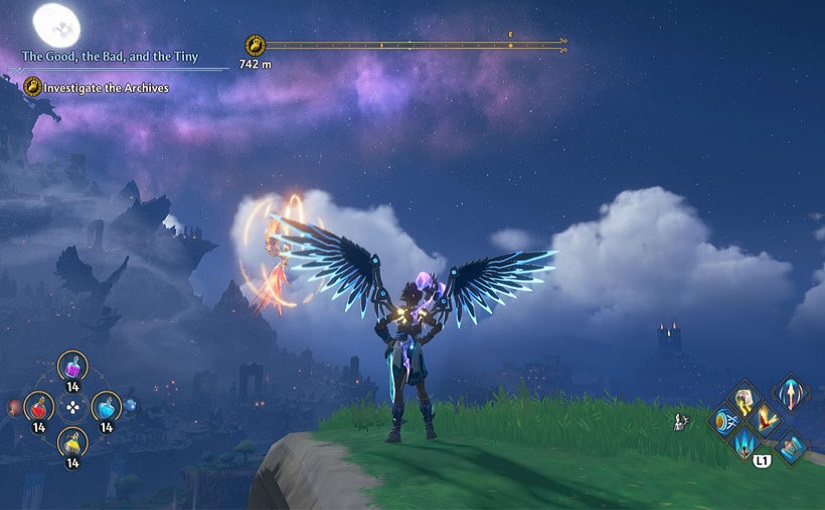
Use Icarus’ wings to soar around the map. Don’t stray too close to Helios, though.

Said gameplay consists of exploration, combat and puzzle-solving. The exploration is satisfying, but would be more rewarding if the world was more alive. The combat is swift but fairly standard. Elite enemies can give players a hard time early on, but things get easier as more moves and abilities are earned. The puzzle-solving comes in a few different flavours, ranging from sliding fresco puzzles to lighting torches in the correct order to open a door. The world is dotted with Gates of Tartaros, portals to ruined structures suspended in an interstellar void. These areas contain some of the game’s most devious puzzles, and it’s most valuable treasures.

The Gates of Tartaros bear a striking resemblance to The Legend of Zelda: Breath of the Wild’s shrines. Spread out across the map, containing challenges or arena battles, and walls that our hero can’t climb. They’re not the only similarity to Link’s most expansive adventure, either. Immortals’ player character Fenyx (customised by the player with a limited character creator), has many of the same skills and equipment as Link, or at least close equivalents. Expect to glide around the map once a certain item is acquired, shoot arrows, and lift heavy blocks using an ability not dissimilar to telekinesis. Luckily, though, Fenyx’s weapons don’t break.

It’s derivative of Breath of the Wild (and probably Ubisoft’s other games, I really wouldn’t know), the Gates of Tartaros challenges can slide into the frustratingly fiddly, and the world doesn’t quite feel authentic, but this is a fun and exceptionally nice-looking game. The act of traversing the world is satisfying, the voice acting is on point, and the dialogue should raise a few smirks (though not every gag is a home run). Immortals: Fenyx Rising’s myth probably won’t live on through the ages, and it’s no titan of the industry, but it’ll definitely keep you entertained for a week or so. I’d call that heroic, at the very least.

Played on PS4