
Gravel

Gritty Unrealism

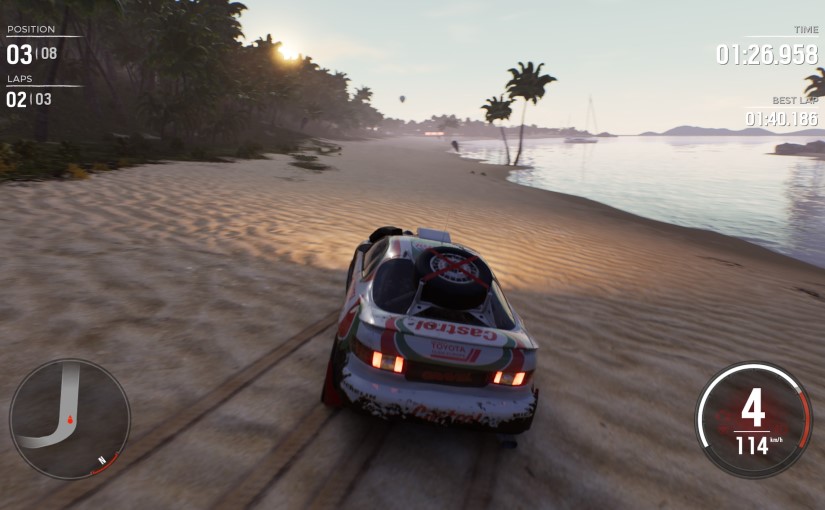
There’s nothing like an arcadey racing game when you’re a few whiskeys deep in the rumpus room on a weekday evening. Wreckfest has been my go-to for this sort of activity for the last year or so, but while watching a YouTube video on the recently-released Screamer the other day I saw a few clips of Milestone’s previous racing game, Gravel. My eyes were treated to visions of a Toyota Celica with Castrol livery speeding along a beach alongside various other iconic AWD masterpieces, and I was instantly smitten. The guy who made the video said that Gravel was great, and I felt that a quick trip to eBay was in order.
Milestone made use of Unreal Engine 4 to develop Gravel, making my witty subtitle work on multiple levels.

Sitting on a Metacritc average of 67, Gravel, which was released back in 2018, obviously didn’t set the racing game world alight, but for those who like high-speed thrills and off-road chaos in exotic locations, Gravel is a bit of a hidden gem if you’re willing to ignore some of its flaws.

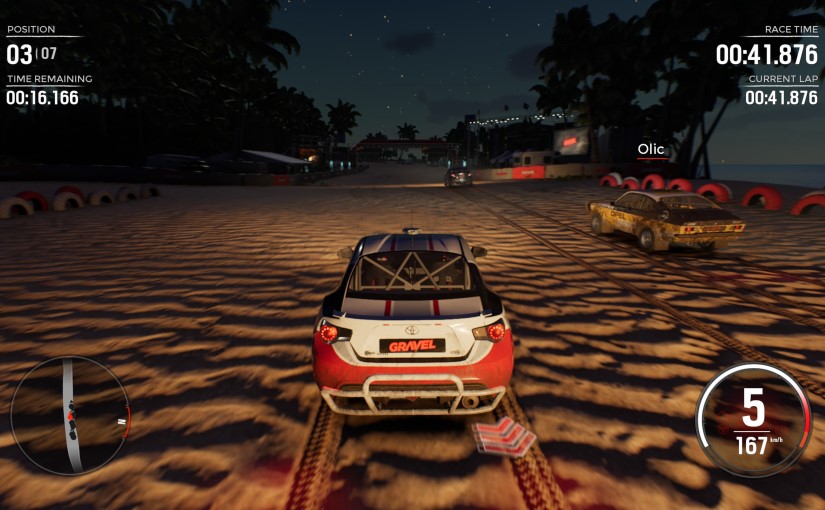
First off, it’s got some absolutely iconic licensed vehicles. If you want to slide around the coast of Namibia in a Subaru Impreza WRX or a Mitsubishi Lancer Evolution then you’re golden, and more importantly, the Toyota Celica, Lancia Delta Integrale and Lancia Stratos are all present and correct for the Sega Rally Championship fans out there. The track designs, aside from some tight, winding arena layouts, emphasise long, high-speed turns and extended, pedal-to-the-metal straights scattered with water hazards and jumps just to keep you on your toes. This, along with some forgiving handling and a rewind feature, makes for a somewhat casual but always enjoyable and occasionally spectacular experience that’s ideal for a bit of digital drink-driving.
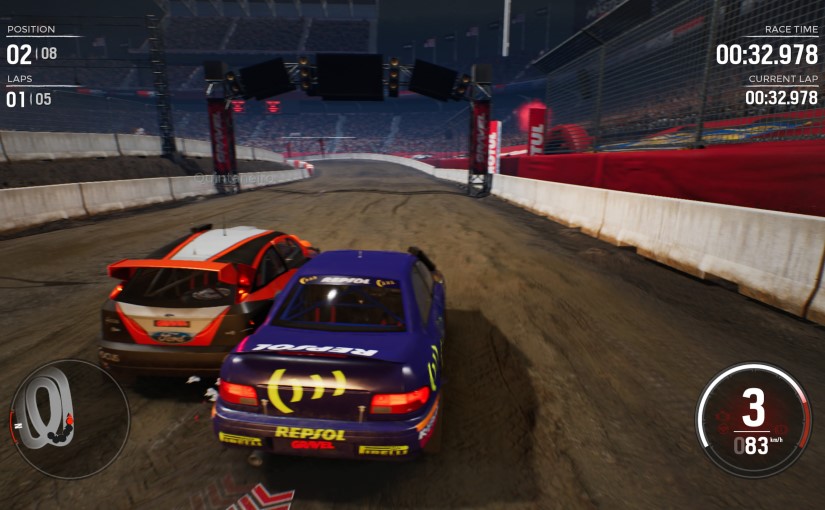
Visually, it kind of reminds me of 2007’s Sega Rally Revo for PS3 and 360, which should tell you something.

If you wanted to pick some nits, though, they’re not hard to find. Visually, the game isn’t anywhere near the top of the pile, and while it looks fine in motion, the cars can appear a bit flat and the environments a little messy. The sound is just fine, with acceptable engine notes, a somewhat generic metal soundtrack playing in the background at all times, and a kind-of-charming narrator who sounds like he’d be more at home announcing events at a steam rally in the British countryside. The physics aren’t great though, and crashing at high speed in Gravel will demolish any illusion of driving a high-powered rally vehicle as your ride flips around like a cereal box caught in a brisk wind.

I have encountered some glitches, too. Most notably my car disappearing after making use of the rewind feature, leaving me to finish the race using only my tyre tracks to figure out where I am. This has happened on three separate occasions so far. I successfully finished the race twice, and had to restart the third time because I just couldn’t keep track of where I was. Then again, I was tipsy at the time.
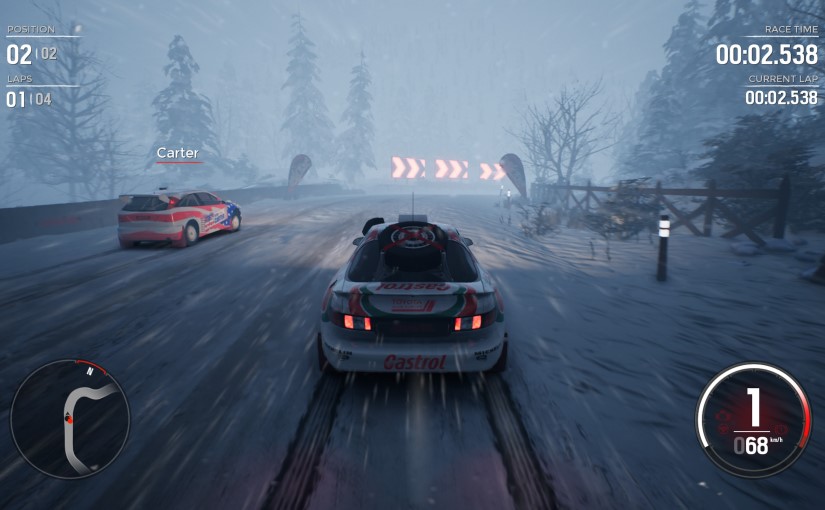
Throughout the career mode you’ll face off against specific opponents. The scenes that introduce them are delightfully cheesy.

Faults and frustrations aside, Gravel is a very entertaining, undemanding racing experience that really feels like an arcade blast from yesteryear. It can’t touch the likes of DiRT or Forza Horizon for technical mastery and visual spectacle, but it can absolutely bring the thrills, and when you’re kicking up sand in your Castrol-livery Toyota Celica, blasting along the beach with Imprezas, Focuses, and Lancers jostling for position all around you, it’s absolute racing bliss. As such, I’m very happy to recommend that you try some Gravel in your diet.

Did you know that many species of birds eat gravel? It’s good for the gizzard, apparently.

Played on PS4

Alien: Isolation

Is This a Rescue Mission, or Another Bug Hunt?

One of the last scripts I wrote for the sadly-defunct TripleJump YouTube channel was a giant list ranking every single Alien and/or Predator video game ever made. Unfortunately, the channel went under before the video was released, but here’s a peek behind the curtain for you; Sega’s 2014 survival horror hit, Alien: Isolation, was at number one. However, despite heavily featuring the perfect organism in a starring role, Alien: Isolation isn’t a perfect game, but it is probably the closest a video game has come to perfectly capturing the atmosphere of the movie franchise upon which it’s based, Alien or otherwise.

This is Amanda Ripley. Her family line has pretty appalling luck when it comes to run-ins with predatory space bugs.

Creatively assembled by British studio, Creative Assembly, who are most well known for the Total War series and its combination of real-time battles and grand strategy, Alien: Isolation took the developers into unfamiliar territory. With very little experience in the survival horror genre, Creative Assembly made a host of outside hires, and soon enough a 100-strong team were orchestrating visceral encounters and crafting ’70s-style retro tech.

The crew were reportedly handed around three terabytes of production material from 20th Century Fox, and through deconstructing this “gold mine” of information, they were able to build a startlingly authentic world that specifically recalled the atmosphere of Ridley Scott’s 1979 original. Stellar lighting and graphical effects, flawless sound design, and a talented cast of voice actors all combined with this vision to create one of the most atmospheric and genuine movie-to-game experiences ever seen.

For a game released in 2014, Alien: Isolation’s environments can look pretty insane. The character models are showing their age a bit though.

It’s pretty scary, too. For most of the game, the player character (Amanda Ripley, daughter of the legendary Ellen Ripley) is completely defenceless against the overwhelming speed, power, and bitey bits of the towering xenomorph, and will have to sneak around quietly, hiding in every available nook, cranny, or orifice in order to avoid a swift and gory demise. They even made it so that the alien can hear sounds that come through your mic, breaking the fourth wall in an unsettling manner and making it so that the hoot of an errant owl in your living room can spell death for poor old Amanda. I told you to keep that window shut.

As I already mentioned, though, this is not a perfect game. Progression can fall into a trial and error process at times, and clever players can work out the xenomorph’s AI, thus being able to manipulate the initially panic-inducing monstrosity into easily-avoidable loops. On the other end of that scale, less proficient players might find themselves constantly harassed by the chitinous terror’s perpetual presence, with observers noting that the xenomorph’s AI tends to be a little too adept at homing in on Miss Ripley even when it should logically be at the other end of the station, violently breaking and entering the cranium of some other defenceless schlub.

Can I tell you a secret? I haven’t finished this game. It’s just too long.

It’s at times like this when Alien: Isolation’s cloying horror can teeter on the verge of aggravation and annoyance, and players might find themselves desensitised to Amanda’s torso getting brutally severed by the xenomorph’s spiky tail after the fourteenth time in a row while fear turns to frustration and frustration turns to controller-throwing rage. All of this, along with long stretches of dealing with the less-interesting android enemies, means that Sega’s most beloved Alien adaptation can outstay its welcome a bit.

During its high points, though, Alien: Isolation is excellent – a stunning interpretation of the first film’s timeless atmosphere and an almost unbearably tense and trouser-ruining experience throughout. As the game celebrated its ten-year anniversary in October 2024, Creative Assembly employee and Alien: Isolation creative director, Al Hope, confirmed that the team are working on a follow-up, and if they iron out the annoyances that made Alien: Isolation fall just short of all-time great status, this follow-up has a chance to be the best sequel since Aliens.

The Seegson androids have more in common with Ash than Bishop. That’s a bad thing.

This article was written for the now-defunct Sega Force Mega as part of a planned Halloween special featuring lots of Sega-published Halloween-appropriate games, alongside The Ooze and Devilish. This is the last unpublished article I’d written for that magazine. I updated the intro to reflect the fact that TripleJump are also now defunct.