Visions of Mana is an Ouka Studios-developed, Square Enix-published action RPG released in August 2024. It’s the fifth main title in the Mana franchise, and tells the story of Val, a Soul Guard charged with escorting the Alms to the Mana Tree on a sacrificial mission to save the world by maintaining the flow of Mana.
One of my favourite games of all time is Secret of Mana. It was the first RPG I ever played, and will always be very special to me. The following is a chronicle of my experience with this surprising modern continuation of the venerable series and it is, unsurprisingly, riddled with spoilers throughout.
Session 1 – Saturday 31st August
I wasn’t sure whether to make a diary of my Visions of Mana play-through. I’m expecting it to be pretty long and didn’t want all that note-taking to get in the way of adventuring. I enjoyed making the Metroid Prime Remastered diary, though, so here we are, Visions of Mana on PS5, session one, just two days after it arrived on my doorstep. I’m expecting all the magic and intangible wonder of Secret of Mana recreated in beautiful 3D, so I’m sure I won’t be disappointed. The opening movie wasn’t disappointing, at least. The Mana Tree looks absolutely stunning.
Starting the game proper, and I’m introduced to a town in a ravine. I do like a ravine town. I’m immediately reminded how much I love the Mana art-style. There’s nothing else exactly like it. It seems like I’m playing as some random guy, though. A fellow called Eoren. I wasn’t expecting that. The music in this opening area is great, by the way.
It seems like Eoren is trying to escape the ravine town with a woman called Lyza who was named the Alm of Earth. I like Lyza a lot, but I’m unsure about the game’s voice acting so far, especially that of the random guards who are trying to stop us from escaping. I noticed that Eoren has a devil thing going on in his design – red eyes and horn hair. There are clear themes of sacrifice straight away, and I noted that the fairy character didn’t seem to give much of a shit when Lyza got turned into stone at the climax of this prologue. Interesting. It got me wondering if Eoren would end up becoming the game’s villain.
Still, with that over with, I’m taken to another village near a volcano, and put in control of Val, the guy on the cover. He looks kind of derpy but he’s okay. The game lets us explore the whole village and it’s quite large, and you can even swim in the water down at the beach. I like that the shopkeepers in the Mana franchise are still turban-wearing, dancing maniacs, too.
As the story moved on I decided I definitely don’t like the voice-acting. The quick cameo of Salamando, the Elemental of Fire, tipped it for me. He sounds like something out of a LEGO Ninjago knock-off. I’m pretty sure Secret of Mana sound effects come out of the controller, though. That was a nice touch.

Voice acting woes and some low-budget textures aside, I do like the look and feel of the game so far. That JRPG cosy vibe is right there and the music hits the spot. The distant, looming landmarks like the volcano and the mountain a bit later on somehow give a similar feeling to Visions of Mana’s 2D ancestors. The feeling that a massive world is there, but not quite in reach. I also love the main character models, but the random NPCs have less character. Hinna, who was named the Alm of Fire by the fairy from before and is a non-combat companion, is somewhere in between. She’s pretty, but her hair looks weird when she runs.
Val and Hinna met Eoren out in the wilderness, and I wasn’t expecting to see him again so early on. He disappeared overnight, though. Very suspicious. There was also an overgrown lake in this area that was very pretty, and reminded me of the swamp in the board game Lost Valley of the Dinosaurs. Also, there were Secret of Mana flamingos here. I eventually guided Val and Hinna to the area around the wind village, and this had particularly pleasing visuals, with paths heading into the valley and windmills and trailing pennants in the hills all around.

When we got to the village I met Careena, the dragon girl with one wing. She seemed pretty cool and had a similar rebellious energy to the sprite from Secret of Mana. I’ve seen people online complaining about her “Southern Belle” accent, but I kind of like it. It gives her character something, you know? Not like that generic, breathy anime girl voice that Hinna has, that I’ve come to the conclusion recently is completely worthless. I hate hearing it nowadays. It was that waif character from Granblue Fantasy: Relink that proved to be the straw that broke the camel’s back on that particular subject. I skipped most of Hinna’s dialogue.
Did I mention that even the save points in Visions of Mana are very pretty? Well they are, and they’re called meridians. They’re also the fast travel points. I saved at the meridian in the wind village and called it a night. I’m looking forward to having the chance to play again, so that’s a good sign.
Session 2 – Monday 2nd September
Session one resulted in a lot of writing, huh? Don’t worry, I’ll try to keep the entries shorter from now on.
I started session two with some side quests. I can’t imagine they’ll be too involved. This isn’t The Witcher 3: Wild Hunt, after all. I was right to assume this. Collect a few things. Find some people in the wilderness. Locate a particular view from a painting. Basic stuff.
I was quickly reminded of how pretty this game can be when Val and Hinna re-entered the mountain valley area, especially when we heard that music swell. What a gorgeous-looking game, and the colour palette and visual design really do achieve a Secret of Mana vibe.
Careena and Ramcoh (the small, Flammie-like creature) joined after Val attempted to dye some fabric using the wind (it’s a long story). While walking around the wind village I noted that hiking from place to place can take a while. I’m looking forward to getting those rideable wolf things I saw in the trailer. I also noted here that it’s weird that nobody else has Careena’s accent. Surely everyone in the village should have that same Southern twang? Maybe the game will explain why she speaks so differently, but I doubt it.
With Careena in the party, I tried controlling her in battle, but as we were making our way up the windy mountain the wind vessel (a boomerang given to us by the village elder) activated and the tutorial made me change her class, and she controlled completely differently. I like being able to change the class of the characters on the fly, and the costume changes are cool too. With all the party members and all the elementals throughout the game, that must mean there’ll be a lot of classes to try. For now, I changed Val to the wind-based class and kept Careena with her spear, as I found spear-wielding Careena the most satisfying to control.

Anyway, as we continued up the side of the mountain the picturesque, grassy plateaus gave way into snowy crags. No character footprints in the snow, though. First Metroid Prime Remastered, and now this? Come on, developers, up your snowy footprint game, please.
We found a meridian halfway up the snowy mountain and it was time for me to sort out some lunch, so that was the end of session two. Maybe I’ll come back to it a bit later today, but for now, I’ll just say I’m very happy with the game now it’s gotten running. Peak JRPG cosiness.
Session 3 – Monday 2nd September
Straight in with a boss fight on this session, and it’s the Mantis Ant! The first boss of Secret of Mana and the boss from the trailer, too. Also, during this fight, the characters and the Mantis Ant pushed the snow aside as they moved, revealing patterned tiles underneath. Excellent. Anyway, the Mantis Ant was easy, and we rescued Sylphid, the Elemental of Wind. Careena also became the Alm of Wind. Our next stop was some moonlit snowy drifts, and the visuals of this area were a definite “wow” moment.

Not long after being wowed by a snowy mountain vista with a giant moon watching over it, we had our first difficult fight. A giant fish guy with a spear kept freezing us in place and smacking us with a blizzard spell. Careena was downed and I swapped to Val and used a Cup of Wishes to revive her. I kept playing as Val and loosed off the big special move so the fishy guy’s health was low, but then Val got dropped, so I swapped back to Careena and finished it off. This confirmed that downed allies still get experience from fights. That’s a relief.
Also, I’d like to apologise for my previous comments about footprints, as I could just about make out Careena’s footprints in this area. It seems that only the character you’re controlling leaves footprints, though.
As we reached the abandoned snowy town of Etaern, I realised that you can only control Val in towns, which means I’m never going to be able to avoid hearing him say “grrrrrizly!” when we find that honey stuff. I met the cat bloke soon after this realisation. He reminds me of Evan from Ni No Kuni II: Revenant Kingdom, and seems cool. I like his voice acting. He wanted us to help him find his moon treasure.

I had to end the session abruptly as the family and I went out to eat. I really don’t eat out as often as these diaries make it seem. Anyway, the game was saved at the meridian outside of the cat’s tent.
Session 4 – Monday 2nd September
Fitting a third session in today! The cat man is called Morley. I tried him out in combat and he’s fun to control. He feels kind of like a knight crossed with a fencer crossed with a ninja.
I can now confirm that all of the characters make footprints in the snow, too. How did I not notice this in previous snowy areas? Look, I take everything I said about the footprints back, okay? Anyway, we were able to see into the past in Etaern because of the moon’s magic or something. We witnessed child Morley breaking a giant sandglass. Typical! The sands of time made the cat people from the town disappear, and suddenly Val is alone, chasing the kid version of Morley. I’m playing some kind of time-travelling vision, it seems. We received the Luna Globe, the vessel of the moon, which was activated and turned Val into a golden-armoured knight with a lance and shield. I didn’t really like this outfit or controlling him in this class, so I doubt I’ll use it much.
We sorted out the whole sands of time debacle, helping Morley feel more confident and leave his past behind, and he became the Alm of the Moon. Upon exiting the town we met three cat girls (more cats than girls) and I only just remembered Neko from Secret of Mana. These cats are merchants, too.
The big dogs were the next major highlight! They’re called pikuls. They’re super cool (and actually massive compared to the characters), but I couldn’t work out how to dismount at first. I figured it out after a while, though. You hold down the square button … if you’re wondering.

We eventually made it through the large area where the dogs are introduced, and reached Rhata Harbor. I’m going to try and catch the town names from now on. Rhata Harbor is a large, rustic fishing village, by the looks of things. Careena accidentally knocked over a rich-looking rat/skunk man here. He accused her of stealing his key. His ship is called the Primm. I get that reference. As Val is looking for the key Eoren showed up and started acting dodgy again. I decided to save now as I was getting tired. Good progress today.
Session 5 – Tuesday 3rd September
I figured I had time for a strictly one hour-long session before work today. Speaking of work, as I booted up this session I remembered reading somewhere that the team behind Visions of Mana got laid off immediately after releasing this game due to Square’s restructuring. That sucks, for lots of reasons.
I rejoined Val and pals in Rhata Harbor, and one thing I appreciated here was the way NPC townspeople are generally doing something other than just standing stoically, waiting to deliver their dialogue. I noticed one guy sitting on a wall in a natural, laid-back pose, and another person washing in the fountain. I also made a note here about Val being built like a brick shit house if you actually look at his character model. Maybe I should start calling him Val Venis.
No. I really shouldn’t. For lots of reasons.
Anyway, we got Careena out of her little jam and started side-questing in the large area that preceded Rhata. I like the big dog-riding music, but I like the on-foot exploration music better, so I only ride the big dogs when I have to. We cleared up the side-quests pretty quickly, and then it was time to board the Primm! Eoren was also on board, and was starting to spread his anti-Alm propaganda. Keep your opinions to yourself, guy! He started talking about the Mana Sword afterwards. Now I’m all ears.

Honestly, I quite like Eoren’s inclusion in the story. He’s an unpredictable wildcard that the player knows more about than the characters. I like that he appears occasionally, acting a bit odd and careless, and subtly throws spanners into the whole Alm thing that everyone otherwise is just blindly accepting. It’s good stuff. The rest of the NPCs on the ship are mostly talking about having a bad feeling about this voyage and hearing rumours of monsters in the ocean. I wonder where this is going…
Sure enough, here comes the giant squid boss fight! It was a really fun and cinematic battle, though, with some neat moments where the squid tried to capsize the ship, It wasn’t all that challenging, but I enjoyed it a lot. Upon defeating the aquatic beast, our new objective is to “Enjoy the Primm”. I feel like Dyluck would have something to say about that.

Once we reached our destination we had a quick nose around Ledgas Bay, which has a coastal Greece vibe complete with an ornate viaduct type structure, and my time was up. I didn’t expect my short, pre-work session to be so eventful.
Session 6 – Tuesday 3rd September
I began this late session pondering my future party members. Obviously you can see the Alms that are going to join the party in the artwork and the intro movie, and I have to say I really dislike the little leaf boy. We’ll see what he’s actually like when we get that far, I suppose. I predict an extremely annoying voice.
Anyway, tonight’s session kicked off in Ledgas Bay, and we rode the water lift to the upper section of town. I’d like to visit here in real life. It has a high end hotel complex/water park thing going on. The giant tree at the exit to the next world section gave me another “wow” moment, too.

We did some side-questing in Pritta Ridge, the next world area and another visual stunner. This one had a coastal theme, and running around beneath the sun beams on a dazzling waterfront finding treasure chests had this perfectly playful sense of adventure and innocent wonder to it. As we got further in to Pritta Ridge, it reminded me of Azshara from World of Warcraft, but Illystana, the “largest city in the world” and our destination, had its own thing going on, with its giant orb of water that hovered over the palace.
This area definitely continued the Greek or Roman style, but the music was straight out of Ratatouille. The party’s journey has a real sightseeing, holiday-making feel right now, despite some heavy moments previously. I wonder if the story will take a darker, more urgent turn soon.
We met a girl wearing a fake moustache and men’s clothing at the fountain. She sprained her ankle and her and Morley had a moment. I’m thinking it’s the queen of this place (and the next party member) on a secret sojourn, Princess Jasmine style. All this subterfuge and drama was too much for me for one night, and I saved and quit at the meridian in front of the palace.
Session 7 – Wednesday 4th September
I found time for another cheeky pre-work session today, and started the PS5 up as I was stuffing baked goods into my mouth for breakfast. Obviously we were still in Illystana, “the largest city in the world”, and I noted that the explorable area around the palace is unnecessarily huge, and they don’t even let you ride the dogs in towns either! Val couldn’t get into the palace, just being the lowly Soul Guard and not a high-and-mighty Alm and all, and the guards sent him back to the market. That’s another long walk without giant fluffy dogs to carry us.
Soon after this the moustached person who bumped into Morley earlier was revealed to be Queen Palamena. I couldn’t believe it. Incredible twist. My jaw dropped to the floor. Incidently, Morley and Hinna are both having their doubts about the Alm role, now, and I’m looking forward to seeing how this is going to play out. Val and Hinna had a quick happy moment following this and night fell over the city. Illystana looks even more spectacular in the starlight.

As we learned more about Palamena, the beautiful Queen of Illystana, whose hips have never once told a word of a lie, it is revealed that she has been named as the Alm of Water. There’s a neat slice of political intrigue here, as her being the Alm of Water means that the little weasel/skunk man can make a play for the throne with Palamena’s young brother taking up rule in her stead. Another interesting little layer to a story that still just seems to be building, and hasn’t really pulled the trigger on anything yet.
Palamena has very wordy dialogue, and is very fond of alliteration (with even the text in the menu screen that describes her fighting style making use of it), and the party have been sent to investigate the Luka Shrine (another Secret of Mana callback) to see what’s happening with the city’s water supply. I would question this whole water shortage storyline, as folks are talking constantly about the city’s water supplies slowing to a trickle when I only have to look around to see that the place is absolutely full of sparkling pools and cascading waterfalls, but I’m too distracted by Palamena’s thighs.
A quick venture back out into Pritta Ridge followed, to discover that we can only have three people in the active party at once. We also did some side-questing earlier in the session. Anyway, time was running short here in the real world, so I saved at the meridian just outside Illystana and headed off to work.
Session 8 – Wednesday 4th September
No work tomorrow so I’m having a late night session. Early on in this session we accidentally picked a fight with some level 53 harpies while exploring Pritta Ridge. We’d seen high level enemies around before, but this is the first time the party had entered into battle with them. It didn’t go well, Palamena was downed, and we were forced to escape.
Eventually we located the Luka Ruins, and I found myself wondering if it was the same place as the Water Temple in Secret of Mana. Does the geography work out? I don’t think so, but the music here feels very Secret of Mana-esque. I liked the area and hoped the story might soon take that dramatic turn I was hoping for here. It would not, not here anyway, but I still enjoyed the mystical, watery atmosphere.

We found weasel-man and his cronies up to no good down in the depths of Luka Ruins, and had to fight a giant crab (that looked exactly like the one from Trials of Mana) called Fullmetal Hugger. Upon defeating the giant enemy crab, weasel-tail spouted some more anti-Alm philosophy, and then ran for it. He’s still at large, as far as I know. As we go back to the city we meet Niccolo, the big cat man who’s been talked about for most of the game. I do not like him, visually or aurally.
Quite a lot happens now in the story, so instead of letting this entry become an essay, I’ll cover the main points briefly.

At night time, Val decides to sneak into the palace and see Hinna. He can’t get in and meets her on the balcony (the inside of this palace is definitely not modelled because the story is really trying to keep me out), and Eoren shows up and says that he can free them from the whole Alm sacrifice thing.
I think now that Eoren is probably my favourite character (after Careena, of course, because look at her), as whenever he shows up he mixes things up and interrupts Val and company’s low-stakes sightseeing vacation.
Hinna is fully against being an Alm now, and Eoren takes Val and Hinna to an island with a shrine on it. This place is known as Reignus Shrine, and, despite this being another visually resplendent area, I have a feeling that something bad is going to happen.
Something bad happened. Eoren used a ritual to steal Val’s monster crystallising powers and crystallises Hinna’s essence into a stone. Hinna seemed to be dying, and a song with sad lyrics started to play. Here comes the dramatic turn I was hoping for! Hinna dispersed into a spray of lights, Val cried, and the volcano near their home village got angry. The next morning, Val and Morley are mad at Val for going off with Eoren alone (a little bit of inter-party dissent), but apparently horrible-looking and sounding cat-man, Niccolo, is going to try and get Val out of his funk.
“I know your best pal, childhood sweetheart and clear love interest just faded to nothing in your very arms, Val, but I need you to get your head back in the game, alright?”
When I regained control of Val a jaunty fanfare played from the controller speaker because I’d gained Hinna’s pendant. A bit of mood dissonance there, taken a little further by the return of the delightful Ratatouille-esque music.
The party reassembled and decided to chase Eoren to the Mana Tree and regain the stone with Hinna’s essence in it. I wonder if this will make her come back? In a way, I hope they let her stay dead. More dramatic that way. I have a feeling we’ll see her again, though.
Anyway, we stepped out of the city and into an area called Ahrvet’s Pasture, but it’s getting late, and that was enough for tonight. Time for bed. If you know it, imagine the Secret of Mana “staying at the inn” music right now.
Session 9 – Thursday 5th September
I started this session while listening to the Rimworld soundtrack. Could two games be more different? I didn’t continue listening to the Rimworld soundtrack while playing Visions of Mana, though. I’m not a barbarian.
We started exploring Ahrvet’s Pasture and fell of a cliff. There were no traversal bubbles here so we followed the river at the bottom of the cliff and found a really tranquil beachside woods area. I noticed something out to sea that looks like a big, dead bug with its legs in the air. The areas to explore in Visions of Mana are relatively huge, and with those syrup things and other pick-ups dotted around, the areas occasionally feel like platformer worlds with collectibles.
Anyway, looking at it from the top of a cliff, the thing that looked like a giant dead bug from further away is actually an enormous, fossilised rib cage. My idea would’ve been more interesting, but I guess a big fossil is more on brand. The player doesn’t get to see the rib cage up close, as it’s beyond the transition point on the map and the game takes you straight to Dura Gorge. This is a canyon area formed of red rock that’s filled with gigantic skeletons of things that look like mammoths and triceratops. It’s the first non-idyllic-looking location (even Luka Shrine had a beautiful grove feeling), but it’s still got that JRPG cosiness.
I’ve been controlling Val again lately, using his water class. The water vessel attack basically sees him holding the vessel and shooting water from the hip, as if it’s some kind of heavy machine gun. Kind of like Old Painless, but wetter.

After getting turned into a moogle for the first time, this session came to a sudden stop because it was raining and my daughter was finishing school so I walked down to meet her with an umbrella. The things I do for my family. I didn’t even get to save, just let the PS5 drop into sleep mode.
Session 10 – Friday 6th September
You know, some of the water in this game looks wonderful. The springs in Dura Gorge look terribly inviting, as if they’re infused with natural salts and minerals, and would soothe my tired bones. A very big rabbit-ogre thing awaits at the end of Dura Gorge, and he does not look like he’d soothe my tired bones at all. Luckily, he was a very easy boss fight. I detected a slight heat haze effect in the entrance to the next area, but before we moved on, I stopped to purchase some more skills in the elemental plots.
It’s how the characters gain abilities, and the abilities they can gain change depending on what vessel they have equipped. You can use items to expand their elemental plots, and you spend element points to learn skills and abilities in them. So far, I have spent Val’s points in the water route, Careena’s in wind and Morley’s in lunar, but I haven’t done anything with Palamena’s points yet. I haven’t decided how I want her to develop.

Anyway, the next area is the Deade Cliffs, and it’s a pretty cool area. There’s a desert town up ahead, and then a fuck-off huge cliff behind it with thick woods or jungle at the top. It really made me want to go up there. The town is run by a big, strapping beast boy called Molebe, who spoke to us introduced Gloriosa who, despite being a cat person, has quite the striking figure. She’s going to help with the Jaque Seed that is supposed to enable us to climb up the cliffs, but I just think “Jaque Seed” sounds rude. Anyway, she planted it and watered it and it just withered, so we’re off to find Gnome to help with the soil fertility or whatever. The game teleports us back to Ahrvet’s Pasture. I wouldn’t have minded walking back.
Oh, and Val’s new water attack that I purchased in the elemental plot reminds me of another ’80s movie. It really looks like he’s firing a proton pack when he uses it. “Don’t cross the streams”, as they say.
Upon leaving Ahrvet’s Pasture via another route, we came to Entwine Bridgepass, and the characters discuss some soppy backstory to the name. I think that’s why I like Careena the most; she’s the least interested in soppy stuff. This area is another visual stunner, with dramatic mountains in the background and a huge and spectacular bridge crossing a seemingly bottomless ravine. There’s a large area in the centre that looks like a boss fight arena, but nothing happens. Maybe on the way back.

Beyond the Entwine Bridgepass is another reddish, Monument Valley-looking area. We’re heading to somewhere called the Free City of Tsaata, hoping to find a ship to the village from the prologue so that we can entreat Gnome. When we arrived (after a spot of side-questing), we found that the Free City was more of a village, or possibly a settlement, and I’m ready to call it a session. It’s raining again, you see, and I have to go and take an umbrella to school so the youth doesn’t get soaked.
Session 11 – Friday 6th September
Another session not long after the last one, and the gang is still hanging out with the free people of Tsaata. I noted here that it’s kind of annoying that the game takes away the double jump while in towns, but I’ll get over it. Tsaata seems to be full of hippie communists … maybe, I’m not all that political and can’t really label their way of thinking. They’re kind of annoying though, but probably harmless.
The party gets sent off on some more side-quests back in the previous area, and we fight an extra-tough harpy enemy high up on a bluff. We used a couple of Cups of Wishes on this fight, and eventually had to opt to escape and re-jig the party setup as it was apparently immune to water attacks. I removed Palamena from the active party and replaced her with Morley with the moon vessel, and removed the water vessel from Val, and we took it out pretty easily. This fight really showed that party setup is a big deal in tougher fights.

Upon reaching the dock at Tsaata we met another wind tribe dragon person. She has a Southern belle accent! I feel like I should be happy about this but I think it actually makes it even weirder that there are now two of them with that accent. She said that a wall of water keeps stopping people leaving Tsaata by boat. I would like to see this phenomenon. We headed back to the centre of town and Careena started dancing with some townspeople, and a gruff, older cat guy called Glyff starts having a go at Val and kicking off about Alms. I don’t like his voice acting and he kind of approaches uninvited and just starts judging us, so Glyff is now my third least favourite character after Palamena’s little brother and the woman that shoves her life choices down our throats at the entrance to Tsaata.
Anyway, Palamena got a headache and she and Val went to the overlooking cliff to get some fresh air, and I get to see that wall of water. It is a very high and very scary wall of water, with a female form on top who was calling to Palamena. She nearly stepped right off the cliff, but Val just about stopped her. It was a cool moment. After this, Glyff gave us the fire vessel (still don’t like him), and we were tasked with heading off to another temple. I decided to save up and end the session, but I’m looking forward to trying out the fire classes and getting to the bottom of what’s causing these crazy, Ponyo-esque waves.

Session 12 – Saturday 7th September
I went for another brief pre-work session this morning, and decided to try Palamena in her fiery form for a bit. She looks like some kind of festive pirate. The place we’re off to is called Tatoh, and it’s a ruined temple that looks pretty cool off in the distance.
Once we got inside, we quickly discovered what appears to be a giant turtle and a pretty girl who have both been turned into stone. I’m guessing one or both will get de-stoned soon, and I’m wondering if we can save Lyza from her stony fate. While exploring this temple I discovered two things. One is that I was wrong about Careena not caring about soppy stuff, as she is drinking in this princess and turtle love story that seems to be the theme of this temple, and the other is that I don’t like Palamena as a fire class. I put the fire vessel on Careena instead, and she looks cool and is fun to control in this form.

Sure enough, upon reciting the entirety of the tragic love story to the turtle, he turned back into turtle flesh and we had to battle him. It’s a minion-summoning fight where he stands out of reach and summons waves of monsters while periodically hurting himself. This was tough, and I actually suffered my first full party wipe here on the last wave, which was a load of machine golem things with pointy heads (they were mini-bosses in Secret of Mana). I needed to change tactics.
We then proceeded to absolutely walk this fight on the second attempt. I controlled Val instead of Careena and re-equipped the water vessel to him, moving Palamena out of the active party and bringing Morley back in. I saved the big watery proton pack attack for the final wave and cleared them up really easily. The big turtle calmed down and beckoned us to follow, so we headed outside.
I had to save and quit here as it was time for work, but I’ll just add that my daughter woke up during the second fight and she really liked the turtle, especially his big, googly eyes.
Session 13 – Saturday 9th September
I came home from work to find that my daughter had been playing Visions of Mana for a few hours while my wife was asleep on the sofa. She’d already got to the pikuls. It took me four sessions to get to the pikuls! Also, I completed Metroid Prime Remastered on the thirteenth session of my previous game diary. I have I feeling history will not repeat itself.
Anyway, we’re going sailing with the turtle! He plunged into the wall of water, the female form appeared once again, and they reunited. Now he has a big lady turtle friend. You can tell she’s a lady turtle because she has eyelashes. The siren thing where Palamena almost gets drawn off the cliff never really gets brought up again, though. Why was Palamena specifically effected? I guess we’ll never know.
The party landed on Jutu’ona, the Earth Continent, and it’s another large desert beset by a sandstorm. The music here is really cool and I enjoyed the less idyllic vibe. The big sea of sinking sand in the middle of this exploration area, as well as the introduction of the mad mallard enemies, are definitely giving me Secret of Mana tingles again. The desert area in Secret of Mana was pretty tough at first, though, and I’m absolutely slicing through the enemies here with fire vessel-equipped Careena’s fire charge move. It also took me this long to notice that Visions of Mana is missing the magi-tech flourishes of Secret of Mana, because I remembered the big sand ship from that game. I wonder if something akin to the Mana Fortress will appear at some point.
We eventually reached Gudju, the ravine village from the prologue, and things aren’t looking good-ju. I remember walking these roads as Eoren many moons ago. We met a character who looks like a Secret of Mana-style dwarf, and lo and behold, his name is Watts. Can it be the same Watts? He’s pro Alm sacrifice, whoever he is. After finding stone-form Lyza and Val having a moment (he’s actually gone through a lot, when you think about it), Watts gave us the Gnome Shovel, which is the earth vessel, and sent us to some nearby mines to look for Gnome, the earth spirit.
The place is called the Gamurda Mines and the music has hints of the Pandoran Ruins music in Secret of Mana. Those same discordant chimes. There’s an ongoing but relatively simple statue-moving puzzle where we used the Gnome Shovel to take control of golems, and I was expecting to fight an Earth Gigas at the end, but it was some kind of giant mole/anteater thing called the Jewel Eater. It was an easy fight. Gnome and Watts met at this point, and I was expecting them to know each other but they didn’t appear to. Is this the same Watts or what, then? If not, why is he the only one that looks like the Secret of Mana dwarfs, with the black void skin and glowing round eyes? We saw more normal looking dwarfs during the prologue with Eoren. Very confusing. Anyway, back to the turtle.
Now we can control the turtle! He splashes through the water with the greatest of ease, and the music sounds like something out of Cool Runnings. We explored the oceans and found a snowy town, a floating island, and a super tall tower, none of which we could go to. We also went back to the starting village and spoke to Val’s mum and dad and they were all like “make sure you look after Hinna!” Awkward.

Our actual destination was Deade Cliffs, though, and I decided to save and call it a session once we arrived. I noted down that it’s weird that we haven’t met the leaf boy yet – it’s been ages since we’ve had a new party member. I also wondered what was going to happen with the dark and light Alms.
Session 14 – Sunday 8th September
Another shorter session, this time on a rainy Sunday morning. At Deade Cliffs we got a nice little cutscene showing the seed grow, and now the cliffs are dominated by an enormous beanstalk.
As the party is preparing to ascend the cliffs, I ponder on what the story might be missing. It still feels quite casual, and I’m wondering if some kind of evil empire or obvious villain might have shook things up. Eoren has a good story arc to him, and we totally understand his motivations, but I think he could exist alongside some kind of more obvious, looming threat to make things feel a bit more imminent. I guess terrible fates befall villages if the Alms don’t make it to the Mana Tree, but there are too many questions surrounding that concept for it to feel like a clear threat.
Anyway, the jungle at the top of the cliffs is another visually wonderful area. I do love a lush, verdant and exotic forest in a JRPG. We found another place here that looks like a boss arena but isn’t. Maybe we’ll fight something on the way back again? Or maybe certain bosses weren’t included in the final game but their arenas were already made. I would find out soon with regards to this particular area.
So we made it to Verdeus Borough, and I found myself anticipating that I’ll soon find out just how annoying the leaf boy is. The party meets him playing some kind of guitar and singing a weird little song and, yep, I hate him. There’s a story about him watering his friends and looking after the grove while all the other inhabitants are hibernating in tree form, that culminates in a very easy boss battle against a giant plant boss like the ones in Secret of Mana at the empty arena area I discussed earlier, but I just want it over with so I can equip a vessel to leaf boy and change his outfit.

Dryad, the Elemental of Wood, eventually shows up and Julei (that’s leaf boy’s name) joins the party, and we also get the wood vessel. I equip it to him and now I don’t have to look at his chubby legs. Much more tolerable. He’s clearly a healer-type character who can apparently revive downed allies. I might need to sub him on for the occasional boss fight.
Anyway, time was up, so we’ll have to head on towards the Mana Tree next session.
Session 15 – Sunday 8th September
I was playing a bit of Disney Dreamlight Valley before this session. It seems pretty good if you like that sort of thing. It’s no comfy JRPG, though. Back to Visions of Mana.
We’re in the Mylos Woods and there’s a barrier around the Mana Tree that keeps monsters (and Val) out. That thing is definitely coming down, probably due to Eoren. That’s what I thought, anyway, but things played out a bit differently.
Mylos Woods is another beautiful forest area. I guess it would be the equivalent of the Pure Land in Secret of Mana? Although, it very much lacks the difficulty spike that the Pure Land was packing. The place is gorgeous, though, and nails that Mana series storybook illustration feel. Evoking Hiroo Isono, the amazing artist responsible for the Secret of Mana cover art. The area beyond the Mylos Woods is also stunning, though we didn’t get to explore much of it because shit goes down.
So Eoren was there, and so was the Mana Sword, and the “rock” it was stuck into doesn’t look like a rock to me. That’s an egg. Eoren and the party talked, and Eoren made a good point; that Val was okay with Hinna dying because of the Alm sacrifice – Eoren just made it happen sooner.
He also mentioned the Benevedons, which are the boss monsters from Trials of Mana. I never did quite finish that game. Eoren tried to take the sword and a big, scary, angel-looking man appeared. I guess he came from the egg? Anyway, he claims the Mana Sword, and really sounds like that big bad I was craving. He casts Eoren aside and we have to fight him. The battle was tough and we just about survived, and a tree man called Trent appeared from nowhere and helped to hold him back while we escaped. The bad man is called Daelophos, and he apparently tried to overthrow the Mana Goddess long ago. Was he from Trials of Mana? I can’t quite remember.
During the ensuing discussion in which lore is dumped and next steps are discussed, Julei intermittently strums his guitar in a grandiose manner while talking. The little prick is starting to grow on me. A bit.
The next stop is Gudju again, because the Benevodons that Daelophos is trying to resurrect are located near where all the Alms are appointed, and he said something about earth apparently, meaning the party decided to go there first. I must have missed him mentioning earth.
What followed was a very long session of side-questing and travelling back and forth, which I won’t bother recording. Eventually, the party landed once again on Jutu’ona, and then it was time to save and quit. Until next time.
Session 16 – Monday 9th September
Some side-quests popped up in the desert so we took care of them, then we headed back to Gudju. We arrived too late to stop Daelophos (who I’m going to call Dale from now on because that’s so much easier to type) from slicing both Eoren and rock-Lyza with the Mana Sword. Dale buggered off to his next mission, and Val claimed Eoren and Lyza’s core stones, and that’s it for them. Maybe.
It turns out that Dale has summoned the local Benevodon, whose name is apparently Gareth. Well, it’s actually Garethe, but come on, if the main villain is called Dale then this guy is definitely called Gareth. Anyway, Gareth is apparently in the desert next to the boat, and the boat is apparently called the Dyluck! On the way out of Gudju leaf-boy says something else that endears him to me. “There’s never a dull moment with you people. Are you constantly fighting monsters, or did I just join at a bad time?” This is totally what I’d be like if I joined a JRPG group. I still don’t like him, but I brought him into the party because I thought we might need healing against Gareth.
The fight against Gareth was very cool. We were onboard the Dyluck which was somehow moving along the sand sea (something to do with Sylphid), and Gareth turned out to be a gigantic sand worm/dragon type thing. Gareth would periodically summon adds like goblins and things (that would satisfyingly fall to their dooms if smashed over the side of the Dyluck), and would attack with huge projectiles. We had to damage Gareth by using the Dyluck’s cannons as he slithered through the sand, exposing his weak points. Eventually, we shot Gareth down and Careena found the vessel of light on the ship. How convenient.

Our next stop was the Dark Archive – a big, gloomy library. I had high hopes for this place, and upon approaching on the turtle I saw that it’s also the location of the super-high tower that I noted earlier. Upon landing, we saw that the area is a spooky, misty shoreline and the party started talking about ghosts. This is a good start.
We spoke to a scholar called Aesh (who is an acquaintance of Palamena), and explored in a big library. I like libraries in JRPGs, they are always very cosy. I always remember the one in Tales of Vesperia that’s also an inn, and the party sleep on the shelves. I sometimes imagine this place if I can’t sleep at night. Visions of Mana’s library is very dark and messy, with books stacked everywhere, some of them symmetrical, like the Philadelphia mass turbulence of 1947.
Anyway, upon speaking to Morley after the talk with Aesh it seems that Morley doesn’t like him, which is interesting, but my eyes were feeling very heavy by this point. Libraries in JRPGs, I’m telling you. They’re too cosy.
We found a fork or something to prop something up. I was nodding off at this point so I couldn’t say for sure what happened. Time to save and quit and have a nap.

Session 17 – Monday 9th September
The nap didn’t last long as the child returned from school. It’s fine, she went to hang out in her room so I thought I’d get another hour of gameplay in.
These nerds in the Dark Archive are kind of annoying, and I think that’s the point. They just talk on and on about theories to the detriment of actually taking action. Honestly, how does anything get done around here? Anyway, we used a fork to fix a building and were given the darkness vessel, which was apparently holding the building up. Morley again displayed his disdain for Aesh, and I’m now realising it’s a jealousy thing. The romantic hints between Palamena and Morely had kind of slowed since her introduction, but that’s definitely what’s happening here.
As we headed up to the super-tall tower seen from the map (in search of some kind of tome), it became clear that Aesh was joining us for this leg of the journey. Morley didn’t like this, and outright called him indifferent at one point. I don’t think there’s anything especially sinister up Aesh’s sleeve or anything. He’s just rubbing the party up the wrong way.
I also noted here that I like how most of the trees have collision detection on their thicker branches, so that players can jump around and climb them if they want. The developers often hide those syrup pick-ups in trees too to encourage it.
Anyway, we entered the tall tower, which is called Passagean Tomespire, and this is a really cool dungeon. There is some weird, upended gravity going on, and the layout of the dungeon changes in these cool, dynamic ways. The bookshelves float and become platforms, and the party uses shadow powers to grapple around from place to place. As the building comes apart and reconfigures, it becomes apparent that the whole area is suspended in this galactic void outside of reality. It’s an awesome journey. With this and the Gareth fight, Visions of Mana is really kicking things up a notch in terms of spectacle.

We also encountered a couple of mimic chests in here, too, and it seems like an appropriate place for them. The boss of this area was also memorable, being an approximation of the Secret of Mana Wall Face enemy, except with rotating rooms and the use of platforms to avoid spikes. We beat it, but only just, and by using lots of items. I really was not set up for this fight, as I had Careena in her fire guise and the thing was immune to fire, and didn’t have Julei in for healing.
We got it though, and back in town Careena started being a dick to Morley about his jealousy. He asked Palamena in front of everyone how she sees her relationship with Aesh, and she says that she sees him as a tutor and also like a brother. Morley is much happier now. We picked up some ingredients for a potion (and Morley and Palamena have another little moment), and it’s time for me to prepare the youngster’s dinner. Session 17 concluded.
Session 18 – Monday 9th September
A late night session to finish the day, and a character called Bon Voyage is involved in the potion making. I know I’ve heard the name and even seen this guy before, but I think it was while I was sleep-playing, as his existence is so confusing and esoteric to me. He’s an odd-looking gnome-like fellow. I don’t really know what the potion is for either. Bon Voyage called it a Corepedo, which just sounds dodgy. Apparently it has something to do with getting Hinna’s core stone back? After talking to Aesh, the scholar reveals that it is some kind of ancient weapon that will slow Dale down while he tries to resurrect the Benevedon at the top of the tower so we can … get the core stone off of him, I suppose.
Unfortunately for everyone involved, Dale arrives in Aesh’s library during this explanation. Dale once again casts everyone aside but Aesh has a badass moment of bravery and manages to lob the Corepedo at him. It weakens Dale drastically but he escapes. Aesh totally just saved our lives. Now the dark Benevedon is awake, though, and Aesh is being all humble because he didn’t predict that Dale would come to the library. Now he’s coming with us.
We had to do the dungeon all over again here, which I wasn’t sure about, but there was an added bit at the end, which makes it okay. The darkness Benevedon appeared and I recognised him! Or her. Or them. In fact, I’ve written about its Seiken Densetsu 3/Trials of Mana iteration for TripleJump. Two giant ugly faces and a giant, creepy, sexy face, all with various devastating powers. The sexy face would resurrect the ugly faces while it was alive, and the three faces summoned trash enemies and enacted black hole attacks. After we defeated the Benevedon of Darkness, Careena called it the Benevedon of Dumbness, which I appreciated. Then Aesh got named the Alm of Darkness.

Our next stop is the light-themed area. It’s called Terratio, and we were looking for info on Cerulia, which is the name Dale cried out when he wasn’t feeling very well earlier. It’s a nice name. Aesh stayed behind.
Terratio is on the snowy isle, and is another visual stunner, a mystical, icy paradise featuring a dazzling aurora overhead. The domed playhouse, the blue trees, the giant, arched mountain in the background with the lights beaming through it, it’s really magical. There was something going on here with actors forgetting their lines and Val clearing their heads with the vessel of light. It’s basically an excuse for Dale’s backstory to be gradually recited to us. The actress playing Cerulia wandered up the mountain in a trance. Her feet were bare and she was walking on ice and snow, and Palamena called back to her siren incident. Also, Aesh showed up again. Hardly seemed worth having him stay behind.

The party headed into the Temple of Wendel that’s at the top of the mountain, which is a cool icy cavern type dungeon, with slippery ice underfoot during certain battles. We solved some simple light-reflecting puzzles, and had a quick boss fight against a Frost Gigas. This one did not turn out to be Santa.
Val was hearing Dale’s voice throughout this area, and it’s clear now that Dale, like Eoren and Val, is motivated by a lost love. With this in mind, we reached the top of the temple and exited into a stunning, starry vista at the summit. I decided to call it for the night, but I’m looking forward to seeing what’s next.
Session 19 – Tuesday 11th September
I decided to get in another quick session before work, and started off strong with the mountaintop view. Also, footprints in snow are once again confirmed. We walked straight into Dale, who summoned a somewhat creepy, giant lady and then went all super-powered before buggering off again. The creepy lady was the Benevedon of Light, and it was a pretty standard fight with a mechanic where her armoured dress had to be smashed off, revealing her giant, levitating, feminine form. We did suffer a total party kill here, but it was due to my carelessness rather than the fight being too tough, and we defeated her the second time.
We met Lumina after this, the Elemental of Light, and I hated his voice. Most of the spirits have annoying voices, it seems. Still, he made Val the Alm of Light, which was a legitimately cool development that I honestly didn’t see coming, although I guess Lyza’s situation somewhat foreshadowed it, having once been a Soul Guard and then chosen as an Alm.
We sat back and watched a play (although Val was dragged on stage) and then smashed some side quests back inside the temple, and that’s all I had time for.
Session 20 – Tuesday 11th September
The characters also leave footprints in sand. I really do take back all I said initially about footprints in this game. The first couple of hours of this very long session were taken up with side-questing and pissing about throughout the world. We returned to the first explorable area outside of Val’s village, and I realised just how much stuff I’d missed. Chests, syrups, whole areas…
Eventually, we finally headed back to Verdeus Borough (where Julei used to live), and I was once again floored by the Isono-style visuals. The way they’ve captured his style of detailed, fantastical foliage in a 3D, explorable world is really excellent. Amazing. We had a quick chat with Trent the tree and then we see the Tree of Mana in the distance for the first time (not counting the low-poly version on the turtle map). The fairy appeared (and I still think about how little she seemed to care when Lyza got turned to stone), and there were monsters here inside the barrier when there shouldn’t be, including those friggin’ griffon claw things from Secret of Mana. So this is the equivalent of the Pure Land. I really can’t stress how gorgeous this place is to experience, though. I can honestly see myself booting up Visions of Mana long after I’ve finished it, just to hang out here.

The whole deal with only Alms being allowed beyond the barrier really made this situation feel special, and made me feel like I’m one of very few who have ever been deemed worthy of setting foot here. We met a white dragon princess named Vadise, and she wanted to know if we “have the strength to face the truth of this world”. A cool little fight with her ensued where she summons adds in between throwing questions at us and making us choose the correct element to attack depending on the answer to her questions.
After this, a guy called Khoda appeared, and I thought that he looked like a more manly Val. It turns out that they are related, and that the Khoda we saw before us is the manifested will of the first Soul Guard, whose job is to guard the Mana Goddess. As we approached the Tree of Mana for real, the game was doing a great job of making me feel like this was a big moment. I’m really impressed with Visions of Mana right now.
Khoda reveals that the Mana Goddess has been asleep ever since the realms merged (so a really, really long time), and then the remaining five Benevedons attacked the barrier, giving us a quick preview of all of them. The attack didn’t come to anything, though, which was a bit weird. We decided that we were going after the Benevedons, but apparently we’re still planning to offer up our souls to protect the flow of Mana afterwards, although Kohda hints that we might be able to change this cycle.
In one last twist for the evening, it’s revealed that Ramcoh is actually Flammie! Somehow. I’m not sure exactly how, but Ramcoh and Flammie are one and the same and Ramcoh can enlarge into Flammie and fly us around the map now. This has shaken me to the core, as Ramcoh is a girl and I always thought that Flammie was a boy.

Anyway, we flew around for a bit, dropped Aesh off at the Dark Archive, and I called it a night after an action-packed session. Next time, Benevedon-chasing.
Session 21 – Wednesday 11th September
So, we are able to choose what order to take on the next four Benevedons, and we went after the Wind Benevedon at Longren, Careena’s homeland. It was super windy there. I mean, it was always windy there, but now it’s really windy.
I had to stop now briefly to hang out the washing, and it was really windy outside, too. I felt appropriately windswept by the real wind when I came back inside to deal with the fictional wind.
The Wind Sanctum was blocked off by an easily-climbable boulder. Ramcoh wouldn’t fly over it because she didn’t want to go back to the Wind Sanctum. This was all a big set up for Careena to try and talk the villagers into helping them move the easily-climbable boulder. I took control of Careena in a town for the first time as she wandered around and appealed to her parents, her junior wind-dyer person, and the village chief. All of them were jerks to her and every conversation ended in an argument. I’m on Careena’s side, and not just because she’s my favourite. She had a good point every time. They all helped in the end, and Sylphid too, and the easily-climbable boulder was removed. On to the Wind Sanctum!
The route up to the Wind Sanctum was a moody, stormy, jagged mountainside. Halfway up the mountain we were attacked by a pair of mini-bosses; two giant harpies that kind of looked like Felicia from Darkstalkers but with wings. It was an enjoyable and enjoyably difficult fight, but we took them down first time. Upon reaching another magnificent and awe-inspiring peak, it was time for me to save and quit at the meridian as other responsibilities beckoned.

Session 22 – Wednesday 11th September
Let’s get an hour in before bed time. Tonight’s session kicked off with a boss fight. The Wind Benevedon was a big, winged, wolf-like creature. It was a pretty straightforward battle to be honest, fending off the big blue wolf’s windy powers. I’d say that the two harpies we fought in the previous session were more difficult. The Wind Benevedon went down and Careena’s early-game love interest character, Shiriu, was saved. He was in danger by the way. I don’t like Shiriu and I don’t care about him.
A few times now I’ve noticed the elementals being late for stuff, acting evasive, and just not showing up when needed. The fairy, too. I can’t imagine they’re going to be up to anything shady, especially the elementals (they were forces for good since the SNES games), so maybe they’re just being shown to be a bit incompetent at times, or aloof, shall we say.
Anyway, we decided to go to Illystana next, to take on the Water Benevedon, and I am forced to take back what I said earlier about the developers not rendering the inside of the palace and using story excuses to keep Val from entering. This time, we just went straight inside, and it looks very snazzy. It’s kind of a standard JRPG palace interior to be honest (I could be exploring Dohalim’s palace in Tales of Arise, for example) but it’s pretty impressive and I do notice some nice paintings of other locations dotted around the walls, like the playhouse and the Dark Archive.
We met Iain, Palamena’s brother, again, and I found myself wondering once more why he looks so wet. I didn’t make I note of it when we met him before, but it’s like the developers went overboard with the highlighting and made him look like he’s made of damp plastic. I don’t like Iain, although I do sympathise with him for his plight, being left in charge at such a young age because Palamena was the Alm and had to abdicate the throne.
Suddenly, all the water was gone! The giant orb of water above the palace, all the fountains, all dried up. This sounded like Benevedon nonsense to me, and we were sent to Luka Shrine again to deal with the problem. Illystana had a very different ambience without all that running water.
I hope the people of the city will be alright without their waterfalls for a while, though, as it was time for me to go to bed.
Session 23 – Thursday 12th September
I had less than an hour free before work this morning, but wanted to see if we could slay a Benevedon.
The “undertemple” of Luka Ruins made me feel like I was exploring a big goldfish bowl with decorative ruined buildings. Kind of like in World of Illusion Starring Mickey Mouse and Donald Duck but with less memorable music. We proceeded through until we reached a large squid monster thing that served as a mini-boss. It was another straightforward fight, and the party enjoyed some squid-related banter afterwards, with the ones who were around at the time reminiscing about the squid that attacked the Primm. That seems like so long ago now.
We did not get to slay a Benevedon during this session as there simply wasn’t the time. I saved at the next meridian after the mini-boss.
Session 24 – Thursday 12th September
A fight with a giant, humanoid crocodile started off this late night session. That’s the Water Benevedon, to you! I didn’t catch its actual name. Undine got the heck out of dodge and let the party deal with it. Seriously, are these elementals powerful or weak or what? They’re somehow helpless dweebs while still being powerful demigods at the same time. Anyway, the Water Benevedon fight was pretty straightforward. Back to Illystana!

Lots of side-quests have popped up in Illystana. Honestly, the side-quests feel very basic, kind of pointless, and flow-breaking. There are a couple that are part of a long chain, but for the most part they’re just random tasks for random, forgettable NPCs.
During the ensuing side-quest run, the party was fighting a level 54 harpy mini-boss mob (we’re currently at level 41) in the ruins on Pritta Rdige, and I accidentally fled the battle when it was down to a quarter health. It went back up to full health and I had to fight it all over again. This has happened a few times, where I’ve accidentally fled battles. To flee, you just need to run at the edge of the battlefield for long enough to fill up a small meter. Enemies are constantly getting smashed to the limits of the battlefield, so it’s a little too easy to escape by accident. It’s not the worst thing in the world, but a small annoyance.
We eventually went back to Illystana and spoke to Iain. Palamena promised she’d come back, which was interesting, because Careena told people she’d come back after the Wind Benevedon was defeated, too. Why are they doing that, eh? What about the Alm sacrifice?
Anyway, we headed off to Verdeus Borough to look for the Wood Benevedon, and it was time to hit up that meridian and go to bed.
Session 25 – Friday 13th September
A midday session today, and Trent was feeling under the weather. We headed off to speak to Aesh for horticultural advice, and this Von Boyage character is mentioned again. Who the heck is this guy? Aesh just produces a cure out of thin air, and we headed back to give it to Trent, who felt better immediately. What was the point of all that, then? Trent sent us to the Floating Isle of Ulul. That’s the last visible place on the map that we haven’t been to.
Before we headed to the physics-defying isle, we hit some of the ruins that are in the open world areas, now that we can reliably fight the level 50-54 enemies there. We were fighting the enemies in the moors area near Tatoh Temple when I started to get some glitches. Vessel moves were missing their graphical effects and certain button inputs weren’t working at certain times. I tried a restart and that seemed to sort it out.
We went to the Floating Isle after this, and it’s another trademark Visions of Mana spectacular-looking natural vista. We headed further in, searching for the Wood Benevedon that wants to plant the tree people from the Borough here for some reason. I didn’t really follow the explanation given back at Verdeus Borough, but it’s all good, I was happy being distracted by the scenery. The waterfall lake area near the top of the Isle is serene.

The Wood Benevedon appeared and it’s a very pretty peacock thing. It was as simple to fight as it was fancy – the easiest Benevedon fight yet. My reward, once back at the Borough, was to listen to Julei sing. I regret everything. Incidently, there’ll be more to do at the Floating Isle, as I went back there and tried to go further in but was turned away with an “I’ve got a bad feeling about this, let’s turn back” type message. Interesting. Optional end-game dungeon location, maybe?
Following this, we started exploring and questing again, and I experienced a total party kill on a boss version of one of those triceratops things. That was unexpected. A long session of side-questing and ruin clearing followed this, and then it came to an end. I can’t play all day, after all.
Session 26 – Friday 13th September
Time for a quick bedtime session, and I got that glitch again where the vessel attack effects wouldn’t show up while fighting through ruins. A restart fixed it once again.
We hit the side-quests, and did every ruin. There are ruins in many of the open world areas with boss versions of normal monsters in them. Each one hid a powerful weapon for one of the characters. There was also a side-quest to explore and defeat the boss monster in every ruin, so I was glad to get it done.
Eventually, we went to Etaern (the place with the sandglass that Morley broke) to chase down the Moon Benevedon. Everyone was acting weird in Etaern, including Meelpa, the guy who gave us the big dogs. The party decided to go to an inn to rest, and it was very weird being inside a building as so far no buildings (except for Palamena’s palace) have allowed us to go inside. Careena, Palamena and Julei were also acting weird, and it was quite amusing. Palamena and Julei were especially funny with their chuckle-inducing mood swings. There is a reason that Val and Morely weren’t affected, but I didn’t catch it. Sorry. We, along with Luna, the Moon Elemental, decided that we needed to go to the nearby castle to sort all this nonsense out.

The castle had a time vortex thing going on, with some cool visual effects in the areas where you can see into a different era of the castle. When we were in the past, the music had a weird effect put over it that made it sound really creepy, like a distorted, slowed-down record player. It made me feel quite unsettled. Luckily, there’s some really good banter throughout this dungeon to lighten the mood, with Morley proving to be an amusing straight man to the madness of the three moon-affected loonies.
There was an interesting mini-boss fight against a vampire – a very bat-like humanoid just like the vampire boss in Secret of Mana. I felt like this boss would’ve been really tough if I’d chosen to go through Etaern first. It even healed itself by apparently sucking our blood! The Moon Benevedon – a large frog/chameleon type creature – was fought soon afterwards. This was another cool fight, with the creature summoning time spheres to slow us down, and its design was pleasingly strange. It reminded me of a Slaan from Warhammer crossed with Hypnotoad.

The ghost of an ancient king of Etaern showed up after the fight, and seemed to hint towards a quest for us for after Dale is defeated, which is interesting. Something about retrieving the powerful core from the sandglass to stop it from falling into the wrong hands. The ghost king also mentions that it wasn’t actually Morley who broke the sandglass. An apparition of Morley’s mum also appears, and she and Morley have an emotional (but not overdone) moment, and our favourite cat-man gets a bit of closure. As we returned to town, Morley said to the Meelpa fellow that he’ll help rebuild Etaern. Obviously he’s planning not to sacrifice himself as the Alm, either.
With all that out of the way, we hear that the Fire Benevedon is stirring, and the game transports us to Val’s village. That volcano in the background is looking very angry. Time for bed though. I’m tired and not taking it all in properly.
Session 27 – Saturday 14th September
My only session of the day starts with a bit of chatting with the people of Tianeea, the fire village. Hinna’s parents aren’t around, however.
The volcano dungeon is what you’d expect a volcano dungeon to be. Lava and fiery enemies with an angry volcano dominating the skyline. It’s a cool area, and there’s an awesome, moody, fiery skybox. The AI party members kept falling into the lava here, taking damage and getting the burning status affect so that they’re constantly running around with minimal health. There’s no point healing them because they’ll just jump into the fire again. Idiots. Luckily, the mobs are easy. The mini-boss, which was a flaming interpretation of the Axe Beak, the stupidest boss from Secret of Mana, was also easy.
The Fire Benevedon, a big lava ape, was even easier. It felt like the most simple boss yet. Are we over-levelled?

Anyway, we headed back to Tianeea after this and Val finally told Hinna’s parents about their daughter’s fate. I didn’t really understand all this, as Hinna’s parents were apparently happy with her going off to be a sacrifice anyway. I guess that’s just the way they see things here in Mana Land. These people are weird. Val finds out that Hinna left him a secret letter assuming that she’d fulfil her role as the Alm and he’d head back to Tianeea. He reads it and it’s very poignant. With all the Benevedons soundly beaten, we’re heading to the Dark Archive to pick up Aesh.
We undertook an entertaining side-quest here, in which Aesh took us back to the Passagean Tomespire to ask the party about their backgrounds in order to choose a book for them to read. I quite like Aesh now, his interactions with the party are amusing.
Our next destination was the Entwine Bridgepass. I knew there’d be a fight there eventually, and sure enough, a very picturesque battle with a somewhat mutated-looking Dale ensued. After getting him down to about a quarter health, he broke the Mana Sword and further mutated into a scarier form for part two of the encounter. This form of Dale fired NieR: Automata-style bullet hell attacks, but he didn’t regain his health, so we finished him off pretty quickly. He went for an all-out explosion attack but the elementals all turned up and saved us, and Dale scampered off again. Val picked up the broken Mana Sword, and we chased Dale to the Mana Sanctuary.

The Mana Sanctuary was all purple and cursed. We went in, and there were more time distortions here, Etaern-style. We ran into previous Alms and Soul Guards from previous years, and I found myself hoping we’d see something from Trials of Mana or Secret of Mana. I just want a bit of fan-service! That’s all!
It’s quickly revealed that it’s not just the Mana Sanctuary we’re going to be exploring a purple version of, as we get transported to purple versions of other areas, too. One area is where we fought the Mantis Ant all that time ago, and there is a huge windmill there. We head to the windmill’s door and someone says something about something in there being “too strong”. What the heck is in the distorted, purple windmill, eh? We have to fight another plant boss in a large, open, icy area next, and then a tougher Mantis Ant boss in a purple version of the Deade Cliffs area. There hasn’t been a meridian in ages, and it’s getting late.
The party starts to see the past version of Dale after this and, you know, it really was kind of mean of the Mana Goddess to send him off to fight the Benevedons all by himself. There’s definitely more to all this. We finally find a meridian in purple Luka Ruins, and I put an end to an eventful session. It really feels like I’m getting close to the end now.
Session 28 – Sunday 15th September
We’re picking things back up in the Distorted Sanctuary for this Sunday morning session, and we walked straight into the return of the squid-like creature from the Luka Ruins. This fight felt a little less straightforward than his previous appearance, as he seemed to be hounding my character relentlessly the entire time.

After this, a time echo of Dale from the past revealed that Cerulia was killed by a human thief. I mean, I can understand why he’d be upset, but bringing a whole world to ruin? A fight against two giant golems followed, and this journey through the Distorted Sanctuary really started to feel like a bit of a boss rush, albeit one that was interrupted by normal fights and exposition. A fight against an illusory Trent is the final test here. I did not expect to be fighting the big, helpful tree guy, but he goes down just like all the others.
A quick visit with a past version of Khoda reveals that he was in love with the Mana Goddess. That’s four pivotal male characters (Khoda, Val, Eoren, and Dale) who are suffering from lost loves. I’m beginning to sense a theme. After traversing the last part of the sanctuary that leads to the tree, we’re informed in no uncertain terms that this is the point of no return. I was tempted to run straight in, but I decided to go and smash some side-quests.
Every time we handed in a side-quest I was worried that more would show up, but we didn’t actually pick up any more quests in this run (well, apart from that one bloke in Wendel Temple banging on about some earrings, but he was inside the place where his quest was and we were already there for something else), and we managed to get them all handed in, emptying the side-quest log. I’m sure there are more, but we’d been to most of the main population areas recently and I didn’t seen any exclamation marks, so I decided to draw a line under the side-quests for now.
There are things called Elemental Aeries, which I haven’t mentioned yet at all. They’re basically timed fights that can be accessed around the world by activating altars with the right elemental power. From what I currently understand, once you’ve beaten all of the ones of a certain element it opens up the challenge in the large elemental tower for that element, which are these huge, mysterious towers that are seen all over the place. I didn’t really bother with these, as the few I attempted didn’t seem to have super-important rewards and they just felt like something else to break the flow of the campaign. I could have tried to clear these up before I went after Dale for the (seemingly) final time, but I decided not to bother.
There are also at least two other areas that I haven’t explored yet that I know of – namely the giant windmill in the distorted area, and the section of the Floating Isle that the party was turned away from. If meeting Dale in the Mana Sanctuary truly is going to be the final boss, then it looks like these two things are post-game content. I’ll have to find out another time, as this session has come to an end.
Session 29 – Sunday 15th September
I thought I’d have a last look at the Floating Isle and the mysterious windmill area at the start of this session, and found one more side-quest at the windmill (but no mention of a strong monster, meaning that only the distorted windmill seems to contain an entity). I then went to Etaern and found a whole bunch of side-quests! I must admit that I was not happy about this. Some more Flammie-based jet-setting ensued as Val and the team mopped them up, and then it was time to go and say hello to Dale.
When we found Dale in front of the Mana Tree, he was looking pretty tree-like himself, and seemed to have completely lost his marbles. He thought that Val was Khoda and seemed to have completely slipped into insanity. Before the inevitable battle he morphed and grew into a huge, elemental, demonic Ent. Very intimidating. Also there was rock music. Very invigorating. Almost instantly we were handed a total party kill because I forgot to shuffle my party around to include … you know, healing. A quick reload, and it was time to go again!
The final battle was suitably spectacular with the Mana Tree in the background, the reflections in the shallow water that the fight takes place in and the colourful lighting effects and crazy attacks popping off everywhere. His health was being chipped down rather slowly, and then he took a second form when about half of his health bar was spent, which grew extra arms and introduced some more attacks. There was something going on with his arms cycling through different elements, but I wasn’t paying too much attention to it and was just concentrating on wailing on him while trying to keep everyone healed.
Once we finally got him beat, he still managed to incapacitate everyone in a cutscene explosion attack. However, some JRPG stuff happened, and the party was revitalised by the wishes of the people that the Alms represent. Or something. More importantly, Eoren and Lyza showed up, the Mana Sword was magically reforged, and Hinna’s hand came from off-screen, touching and guiding Val’s arm, almost exactly like Egon Spengler at the end of Ghostbusters: Afterlife. That scene made me sad and also I didn’t like that movie, but this was fine. Val slashed demon Dale with the Mana Sword, and the bad guy was toast. Eoren, Lyza and Hinna disappeared into a cloud of pretty lights.
The Mana Goddess appeared next and said some stuff, along with Cerulia, Dale’s lost love, and then Cerulia and Dale got whisked off into the afterlife together. Khoda then says some stuff before fading away too, and Val, as the hero with the Mana Sword, must now choose whether to keep things as they are or change the world. Val says “the future I choose is…” and then we cut to credits. The credits show some still images of the characters as they live their lives, often hanging out with the elementals. I mean, I assume Val chose to end the Alm sacrifices? Khoda and the Mana Goddess did warn that both choices could have far-reaching consequences, but that’s life, isn’t it.
There’s a post credits scene were “Grandpa Val” dies of old age and returns to the Mana Tree as a young lad again. He sees Khoda, and then reunites with Hinna (who seems to have merged with the Mana Goddess). If Val’s a grandpa, doesn’t that mean he moved on from Hinna? Maybe the unidentified people around his death bed just called him grandpa because he’s old. Either way, I’m sure Hinna would have wanted him to live his life to the fullest. He deserves it. Also, this is explicitly the afterlife, so they really didn’t bring Hinna back to life. I’m impressed.
A New Game + and an Expert Mode is unlocked, as well as an extra chapter if I load up my completed save file. I might hit the extra chapter at some point, but the New Game + and Expert Mode are for players more dedicated than I.
Well, what a journey through a game that could at times look and feel like a low budget JRPG with annoying voice acting, and could at other times feel like a visually stunning journey through an awesomely realised world with likeable characters, amusing banter, and some spectacular and memorable moments.
Visions of Mana was at its best when it was building up to that first trip to the Mana Sanctuary, and the first encounter with the Mana Tree. It really felt epic and important, and the visuals in and around the Mana Sanctuary were stunningly beautiful. Some other highlights include the first trip through the physics-defying halls of the Passagean Tomespire and the occasionally creepy jaunt through the past and present versions of the castle near Etaern.
The combat was rarely taxing, but never outstayed its welcome, and once I’d settled into mostly controlling Careena and flipping between the fire and earth vessels depending on the current enemy, I was having a good time. The side-quests were very basic and tended to hamper the flow, but could usually be dealt with pretty quickly. The music, while never as memorable as Secret of Mana’s, was really good throughout and the voice-acting, despite my earlier misgivings, was usually fine.
There’s more to do, but I’m going to take a break now and play something different. I’ll recommend Visions of Mana. It’s the JRPG genre at its comfiest, with some legitimately great moments and positives that greatly outweigh the negatives. There were traces of that intangible Secret of Mana magic here and there, and I doubt I’ll forget Val and pals in a hurry.
I’ll definitely never forget that Von Boyage character. What a guy.





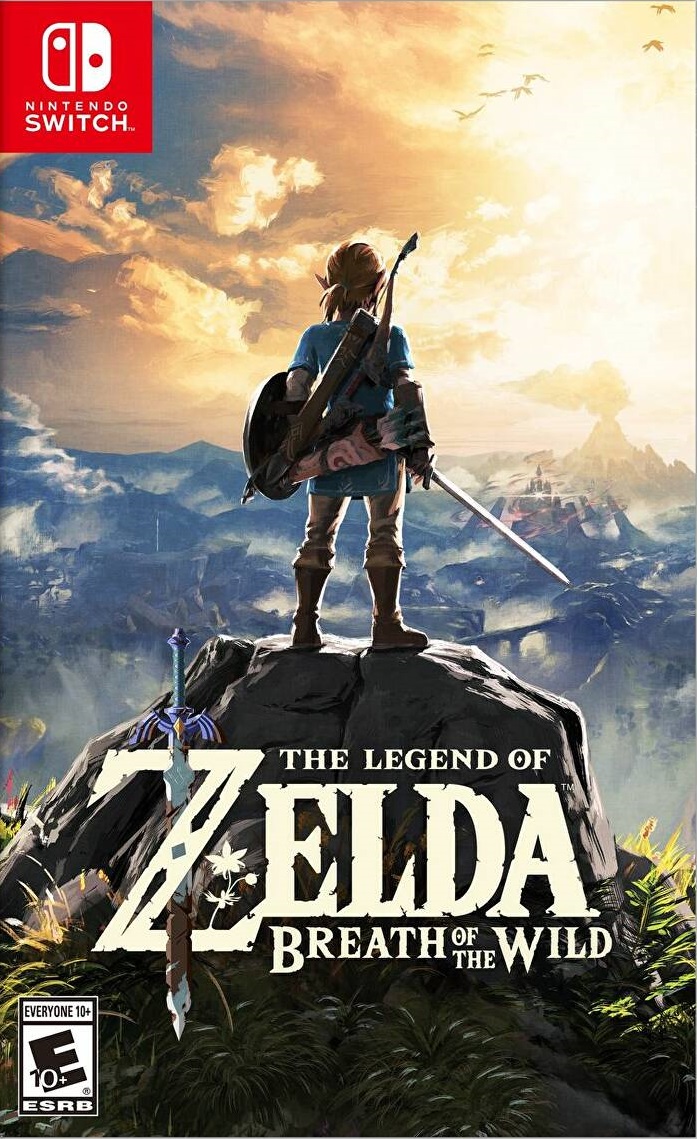 Historically, the Zelda franchise has gone for a prominent logo on a plain or minimal background for its box art, and I’ve seen folks online identifying these as both the best and worst things ever. I like them, but I like this one more. The logo is right there, looking lovely as ever, but it’s backed up by an image that embodies impending adventure. Link, wearing a brand new, blue tunic, stands on a rocky outcrop like someone’s expertly-painted Warhammer miniature, and a world of opportunity awaits before him. This cover represents an exciting new era for one of the world’s premier video game franchises, and invites you along for the ride.
 My pick of the bunch when it comes to cutesy platformer box art is the adorable and mysterious The NewZealand Story. Let’s have a look at some of the characters arrayed on this cover, shall we? You’ve got Tiki the kiwi himself, looking adorably heroic in his trainers, then there’s a whole host of critters standing in opposition. There’s a thing in a floating UFO tank, there’s a kind of sinister-looking, fire-breathing tortoise, there’s a cat-like creature with bat wings, and there’s an absolutely beautiful little bat-mouse thing in the bottom corner, standing there looking like some kind of proto-Gengar. It’s a cuddly yet action-packed composition, and thankfully, that creepy, pink whale boss is nowhere to be seen.
 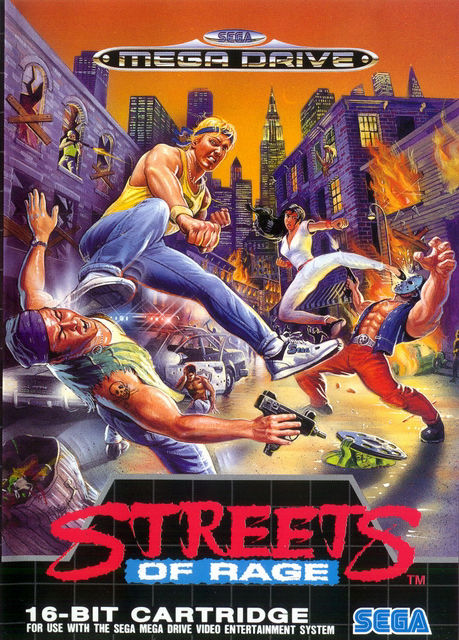 I love a side-scrolling beat-’em-up, and the genre has provided some epic cover art over the years, from the various ports of 1986’s Renegade, right up to the recent Teenage Mutant Ninja Turtles: Shredder’s Revenge. The original Streets of Rage has to be the pinnacle, though. A perfect example of ’90s action movie-style, illustrated box art, this expertly-composed picture has it all. It’s not entirely representational of the game, though. I don’t know why Blaze and Axel have changed their outfits, and no bad guys carry Uzis, wear hockey masks, snipe from windows or emerge from beneath sewer covers (not until the second game, anyway), but who cares when the image is so awesome? I own a cushion with this artwork on it. No word of a lie. I’m leaning on it now, in fact.
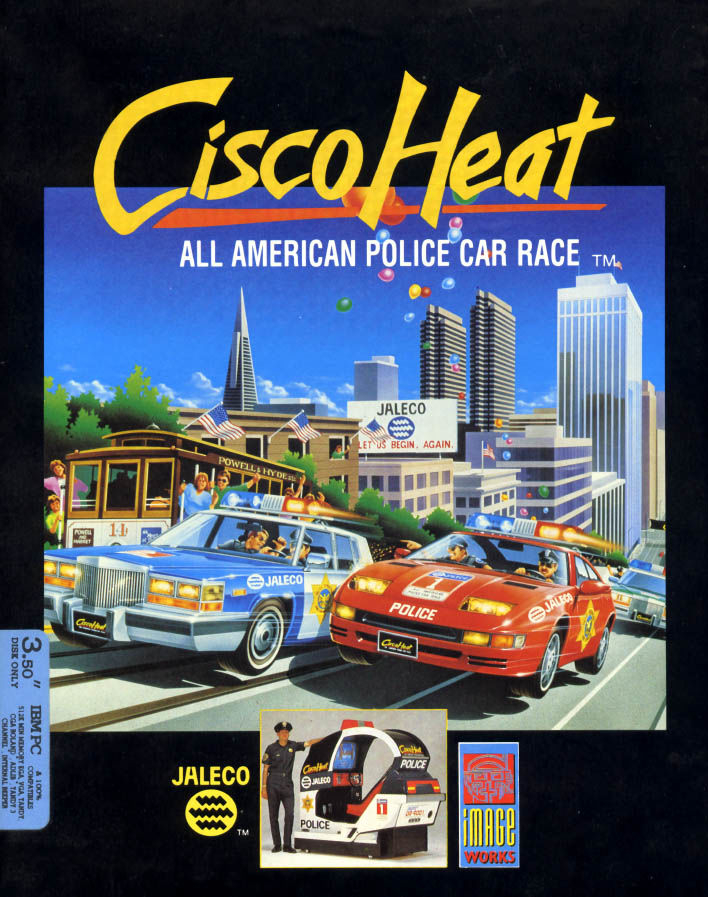 Now, this is more like it! I used to pick up Commodore 64 magazines when I was younger, and I always loved seeing the cover art and advertisements for Cisco Heat in said periodicals. It embodies my childhood idea of what America was like; sun and skyscrapers and cool police chases. When I look at this image, I think of summer, I think of rolling my Micro Machines around my bedroom floor, I think of watching Police Academy on video. Look at that subtitle – “All American Police Car Race”. That’s the stuff that my young, Beverly Hills Cop-inspired dreams were made of. And yes, I do also like the photo of the cop leaning on the cop car arcade machine. Who wouldn’t like that? Criminals, that’s who.
  You could say, if you were so inclined, that the Halo 3 cover represents everything that’s wrong with big budget game covers from its era and beyond. It’s just the main character kind of standing there with a gun, it’s got that whole orange and teal, generic movie poster thing going on, but none of that matters, this is a masterpiece. Every subtle nuance combines to form a piece of box art that’s so inspiring it should be made into a 100 foot stained glass window and installed into a magnificent cathedral so that the morning sun can shine through it, reminding us of the trials and sacrifices of our saviour, Master Chief. The light, the shadows, the perfectly-poised, pre-action pose. This cover isn’t just epic, it’s transcendent. It depicts the precise moment that the ultimate hero of mankind steps into the light, ready to save us all.
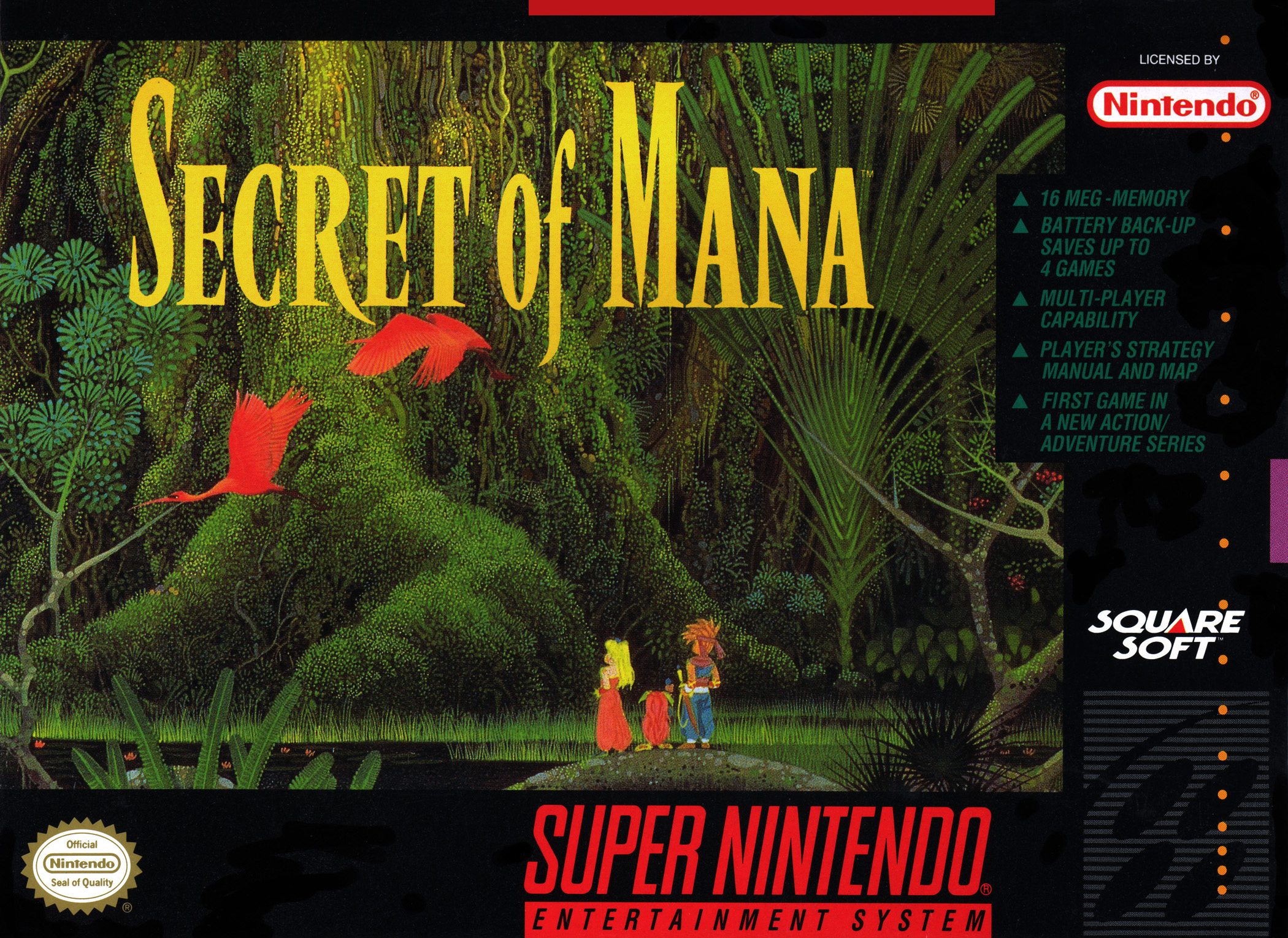 Hiro Isono was an incredible artist. His illustrations of otherworldly groves and mystical glades capture the complexity and detail of nature as well as its mysterious, sweeping majesty. When the lads at SquareSoft hit him up for a bit of cover art back in the early ’90s, it was an inspired move. After all, the driving force behind the lore of